
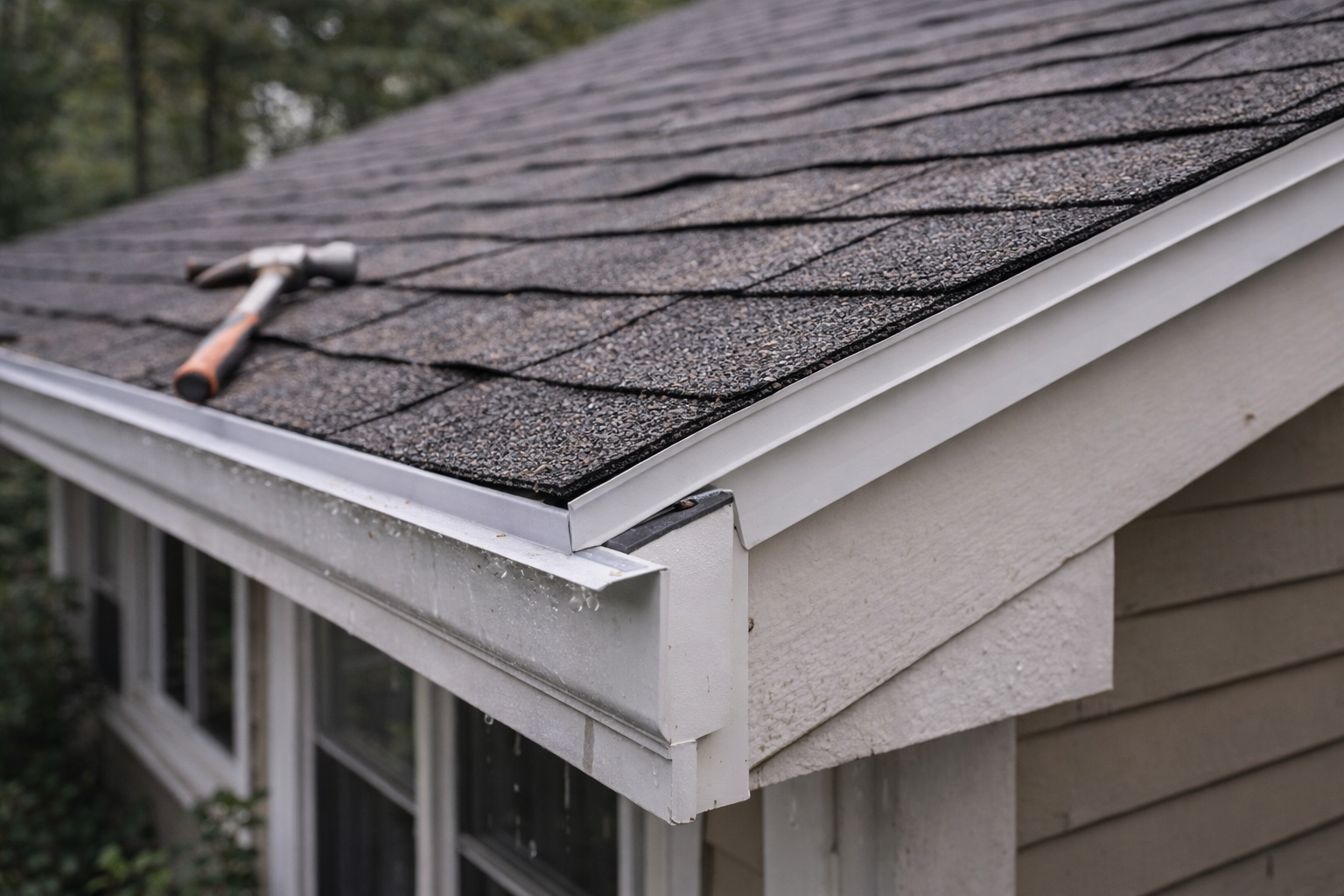
Drip edge is metal flashing installed along roof edges that directs water into gutters and protects fascia and decking from moisture. While older homes in Springboro and Kettering may lack it, drip edge is now required by Ohio building code and essential for preventing water damage and ice dam formation. This simple but critical component extends your roof’s lifespan and prevents costly repairs down the road.
What Exactly Is Drip Edge?
Drip edge is a non-corrosive metal strip—typically made from aluminum or galvanized steel—that’s installed along the eaves and rakes (edges) of your roof. It’s bent at an angle to direct water away from the fascia board and into your gutters, creating a clean water runoff path that protects the underlying wood structures.
This L-shaped or T-shaped flashing extends beyond your roof deck by about an inch, creating a drip line that prevents water from wicking back underneath your shingles or running down your fascia boards. In Southwest Ohio’s climate, where we experience everything from humid summer thunderstorms to harsh winter freeze-thaw cycles, this seemingly minor detail plays a major protective role.
Why Drip Edge Matters for Southwest Ohio Homes
Protection From Weather Extremes
Our Dayton metro area experiences some of the most varied weather conditions in the country. Spring and summer bring severe thunderstorms with heavy rainfall, while winter delivers freezing temperatures that can lead to ice dam formation. Without proper drip edge:
- Water can seep under shingles and penetrate roof decking
- Fascia boards absorb moisture and rot over time
- Ice dams form more easily along roof edges
- Wind-driven rain infiltrates vulnerable edge areas during storms
Many homes built in Centerville, Miamisburg, and Beavercreek during the 1950s through 1970s were constructed before drip edge became standard practice. If you’re living in one of these older homes, there’s a good chance your roof lacks this critical protection.
Code Requirements and Insurance Considerations
Ohio building code now requires drip edge installation on all new roofing projects. This wasn’t always the case, which is why many existing homes throughout Warren, Montgomery, and Butler County areas don’t have it. However, when you replace your roof, your contractor must install drip edge to meet current code standards.
From an insurance perspective, proper drip edge installation can strengthen storm damage claims. When insurance adjusters evaluate hail or wind damage in Springboro, Kettering, or surrounding communities, they look for proper installation of all code-required components. A roof installed to current standards—including drip edge—demonstrates quality workmanship that protects your investment.
Signs Your Home Needs Drip Edge
Visual Indicators
Walk around your home and look for these warning signs:
- Water stains or rot on fascia boards
- Peeling paint along the roofline
- Visible water marks on soffits
- Shingle edges that appear wavy or damaged
- Gutters pulling away from the house
Interior Warning Signs
Sometimes the damage shows up inside first:
- Water stains on ceiling edges near exterior walls
- Mold or mildew in attic spaces along the roof perimeter
- Damp insulation near roof edges
If you notice any of these issues in your Mason, West Chester, or Lebanon home, missing or damaged drip edge could be the culprit.
Types of Drip Edge for Your Roof
Material Options
Aluminum drip edge is lightweight, rust-resistant, and the most common choice for residential roofing in our area. It works well with architectural shingles, which dominate the housing stock in newer subdivisions throughout Bellbrook, Oakwood, and Dayton.
Galvanized steel offers greater durability and is sometimes used with metal roofing systems or in historic applications where matching existing materials matters.
Copper drip edge provides premium aesthetics and longevity for high-end homes, though it’s less common due to cost considerations.
Profile Styles
Different profile types serve specific purposes:
- Type C (L-shaped): Standard profile for most applications
- Type D (T-shaped): Provides additional protection and is ideal for our climate with heavy rain events
- Type F: Specialized design for metal roofing systems
Installation: Getting It Right
Proper drip edge installation requires specific sequencing. Along the eaves, drip edge should be installed before the underlayment, allowing water that penetrates the shingles to flow over the drip edge. Along the rakes (sides), it’s installed over the underlayment to direct water away from the roof deck.
This isn’t a DIY-friendly project. Improper installation can actually create water entry points rather than preventing them. Professional roofers understand the correct overlap, fastening patterns, and integration with gutters and underlayment systems.
Drip Edge Replacement and Repair
If your home in Centerville, Miamisburg, or surrounding areas needs drip edge added or replaced, this work can often be done without a complete roof replacement—though it’s most cost-effective when combined with other roofing work. During storm damage roof replacements, which are common in our tornado-prone region, adding drip edge to previously unprotected roofs makes perfect sense.
Protect Your Investment
Your roof represents one of your home’s most significant investments. Drip edge is an affordable component that delivers outsized protection against water damage, rot, and structural issues. Whether you’re planning a roof replacement or concerned about an aging roof on your Southwest Ohio home, ensuring proper drip edge installation should be a priority.
Ready to assess your roof’s protection? Contact Rembrandt Roofing at (937) 299-9991 or visit https://rembrandtroofing.com for a professional inspection. Serving Springboro, Dayton, Centerville, and all surrounding communities with quality roofing solutions that stand up to Ohio weather.