
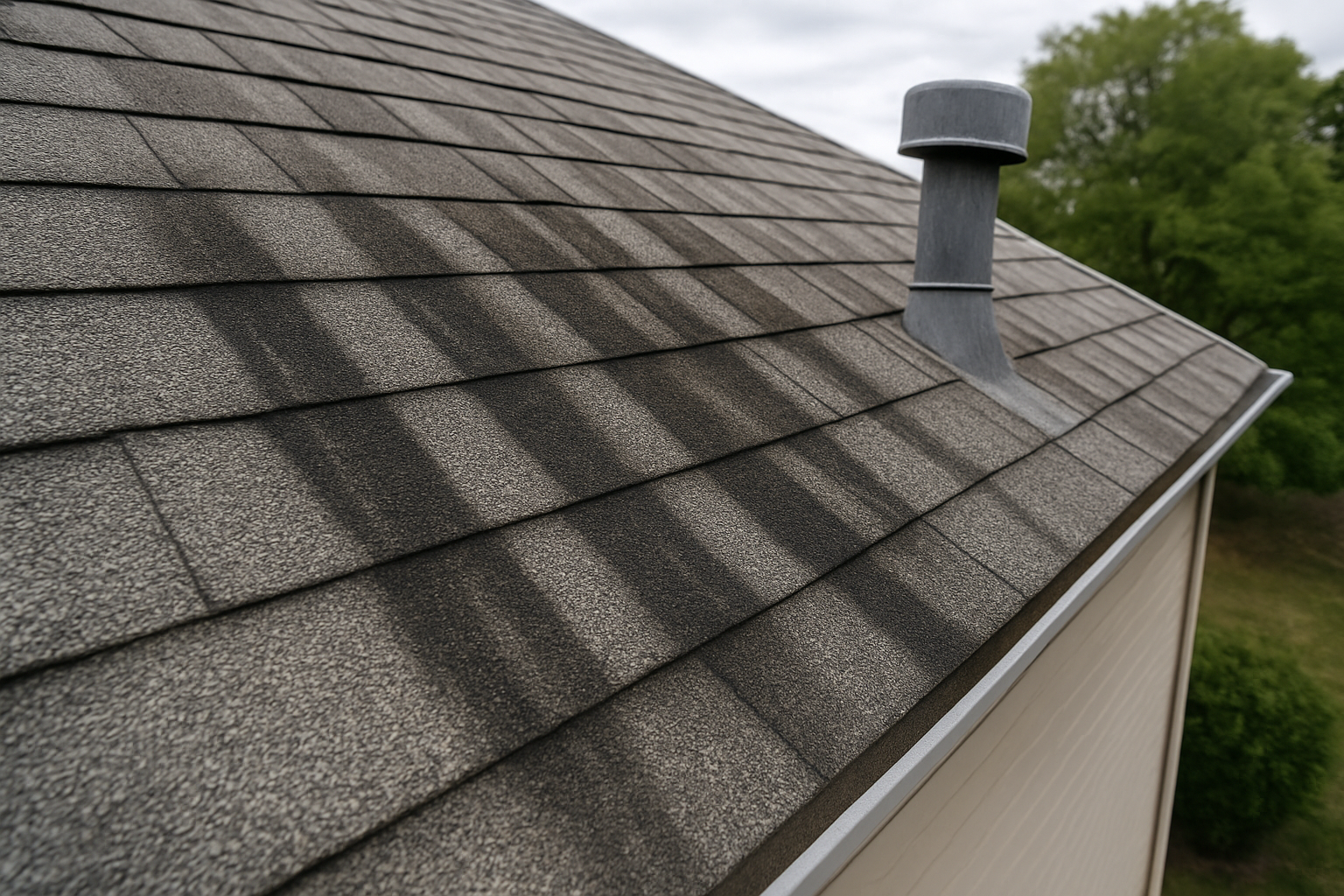
Those black streaks on your roof are algae growth, specifically a type called Gloeocapsa magma, that thrives in Southwest Ohio’s humid climate. The algae feeds on the limestone filler commonly used in asphalt shingles and retains moisture, creating those unsightly dark stains. While primarily a cosmetic issue, these streaks can reduce your roof’s reflectivity and potentially shorten its lifespan if left untreated for extended periods. The good news is that this problem is preventable and treatable with the right approach.
Understanding Roof Algae Growth in Southwest Ohio
The humid summers and moderate temperatures throughout Warren, Montgomery, and Butler Counties create ideal conditions for Gloeocapsa magma to flourish. This blue-green algae forms protective dark pigments to shield itself from UV rays, which is why the streaks appear black or dark gray on your shingles.
You’ll typically notice these streaks first on north-facing roof slopes or areas shaded by trees, where moisture lingers longer and sunlight is limited. The algae spores are airborne and can spread from roof to roof throughout neighborhoods in Springboro, Centerville, and surrounding communities—which is why you might notice multiple homes on your street developing similar streaking patterns around the same time.
Why Algae Loves Your Asphalt Shingles
Modern asphalt shingles contain limestone as a filler material to add weight and durability. Unfortunately, this limestone provides an excellent food source for algae. As the organism consumes the limestone and retains moisture, it gradually spreads across your roof’s surface, creating those characteristic vertical streaks that follow water runoff patterns.
The problem has become more widespread over the past few decades as shingle manufacturers have increased the limestone content in their products. Homes built throughout the Dayton metro area from the 1990s onward are particularly susceptible to this issue.
The Impact on Your Roof’s Performance
While algae growth won’t immediately damage your roof, it’s not entirely harmless either. The dark streaks absorb more heat than clean shingles, which can increase your attic temperature and cooling costs during Ohio’s humid summer months. Over time, this additional heat retention can accelerate shingle aging.
The moisture-retaining properties of algae can also create conditions that make your roof more vulnerable to damage during our region’s harsh freeze-thaw cycles. When trapped moisture freezes and expands, it can compromise shingle integrity and potentially lead to premature deterioration.
From a property value perspective, algae-stained roofs significantly impact curb appeal. If you’re considering selling your home in Kettering, Mason, or any surrounding community, those black streaks can raise concerns among potential buyers about the roof’s age and condition.
Prevention Strategies
Algae-Resistant Shingles
If you’re planning a roof replacement, consider upgrading to algae-resistant shingles. These products contain copper or zinc granules that release metal ions when wet, creating an environment inhospitable to algae growth. Most manufacturers now offer algae-resistant options with extended warranties specifically addressing this issue.
Zinc or Copper Strips
For existing roofs, installing zinc or copper strips along the ridge can provide ongoing protection. When it rains, trace amounts of metal wash down the roof surface, inhibiting algae growth. This solution is particularly effective for homes in Beavercreek, Lebanon, and other heavily wooded areas where shade and moisture are prevalent.
Tree Trimming and Maintenance
Keeping tree branches trimmed back from your roof reduces shade and allows better air circulation, helping your shingles dry more quickly after rain. This simple maintenance step can significantly slow algae development.
Safe Cleaning Solutions
If your roof already has algae streaking, professional cleaning can restore its appearance. However, pressure washing is NOT recommended, as high-pressure water can damage shingles, strip protective granules, and void warranties.
Professional soft-washing uses low-pressure application of specialized cleaning solutions that kill algae without damaging shingles. This method is safe and effective when performed by experienced roofing contractors familiar with proper techniques and manufacturer guidelines.
Never attempt to clean your roof yourself. Walking on shingles can cause damage, and working at height presents serious safety risks. Additionally, improper cleaning methods or harsh chemicals can void your shingle warranty.
Insurance and Warranty Considerations
Algae staining is considered a maintenance issue rather than storm damage, so it’s typically not covered by homeowners insurance. However, if you’re filing a claim for hail or wind damage common in our area, it’s worth asking about including professional roof cleaning as part of the restoration process.
Check your shingle warranty, as many manufacturers now include algae-resistance guarantees that may cover cleaning or replacement if streaking occurs within a specified timeframe.
Contact Rembrandt Roofing for Expert Assessment
If you’re concerned about black streaks on your roof or want to discuss prevention options, Rembrandt Roofing provides free inspections throughout Springboro, Centerville, Miamisburg, Dayton, and all of Southwest Ohio. Our experienced team can assess your roof’s condition, recommend appropriate treatment or prevention strategies, and help you maintain your home’s protection and curb appeal. Contact us today at https://rembrandtroofing.com to schedule your no-obligation roof evaluation.