
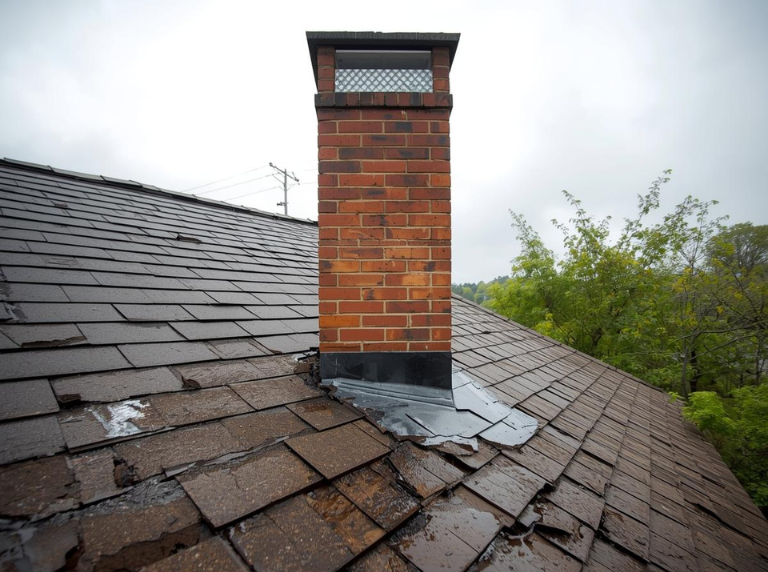
Chimney leaks typically result from deteriorated flashing—the metal seal between chimney and roof—or damaged mortar joints. The freeze-thaw cycles in Southwest Ohio are particularly hard on chimney flashing, causing it to separate or corrode over time. Damaged chimney caps, cracked crowns, and porous brickwork can also allow water to penetrate your roofing system during our region’s intense spring storms and heavy rainfall.
Understanding Chimney Flashing: Your First Line of Defense
Chimney flashing is the L-shaped metal barrier installed where your chimney meets your roof. This critical component consists of two parts: base flashing (which sits on the roof surface) and counter flashing (which embeds into the chimney’s mortar joints). When properly installed, flashing creates a watertight seal that directs water away from this vulnerable intersection point.
In Springboro, Centerville, and throughout Warren and Montgomery Counties, the dramatic temperature swings we experience—freezing nights followed by warmer days—cause repeated expansion and contraction of both roofing materials and chimney structures. This constant movement eventually breaks the seal around flashing, creating gaps where water infiltrates. Homes built in the 1950s through 1970s throughout the Dayton metro area often have original flashing that’s reached the end of its service life, while even newer subdivisions in Mason and West Chester can experience premature flashing failure if installation wasn’t done correctly.
Common Causes of Chimney Leaks in Southwest Ohio
Deteriorated or Improperly Installed Flashing
Over 90% of chimney leaks stem from flashing problems. Aluminum flashing corrodes over time, while galvanized steel rusts. The sealant used to secure flashing—typically roofing cement or caulk—dries out and cracks under our humid summers and frozen winters. Sometimes the issue traces back to original installation: flashing that wasn’t embedded deeply enough into mortar joints, missing pieces, or improper overlap patterns that don’t adequately channel water away from the chimney.
Damaged Chimney Crown
The chimney crown is the concrete or mortar slab that caps the top of your chimney. This component should have a slight slope and overhang to shed water away from the chimney structure. Cracks in the crown—often caused by freeze-thaw cycles or settling—allow water to seep into the chimney where it travels downward, potentially emerging as interior leaks around your fireplace or on ceilings below.
Missing or Damaged Chimney Cap
The metal or concrete cap sitting atop your chimney’s flue opening prevents rain, snow, and debris from entering directly down the flue. High winds from severe storms—not uncommon in Kettering, Miamisburg, and Beavercreek—can dislodge poorly secured caps. Without this protection, water flows directly into your chimney structure.
Cracked Mortar Joints
The mortar between chimney bricks deteriorates over time, especially on chimneys with southern or western exposure that endure intense sun and weather. Water enters through these compromised joints and migrates through the brick, eventually finding its way to your roof deck or attic space.
Porous Brick or Masonry
Older chimneys throughout Lebanon, Bellbrook, and historic Oakwood neighborhoods may have bricks that have become porous after decades of weather exposure. Water absorption leads to interior dampness and can cause the freeze-thaw damage that further compromises chimney integrity.
Warning Signs Your Chimney Needs Attention
Watch for these indicators that your chimney may be leaking:
- Water stains on ceilings or walls near the chimney
- Dampness in your attic around the chimney penetration
- Rusted firebox or damper components
- White staining (efflorescence) on exterior chimney bricks
- Musty odors near your fireplace
- Crumbling mortar or loose bricks
- Visible gaps between flashing and chimney
Professional Repair Solutions
Addressing chimney leaks requires specialized knowledge that combines roofing and masonry expertise. At Rembrandt Roofing, we conduct thorough inspections that identify all contributing factors—not just the obvious symptoms.
Typical repairs include complete flashing replacement using durable materials appropriate for our climate, chimney crown reconstruction with proper slope and overhang, tuckpointing to restore mortar joints, and installation of quality chimney caps. For severely damaged chimneys, partial or complete rebuilds may be necessary to prevent ongoing water intrusion.
Working With Insurance on Storm Damage
Hail storms and high winds throughout Butler, Warren, and Montgomery Counties can damage chimney components along with your main roofing system. If recent severe weather preceded your leak, document the damage with photos and contact your insurance provider. We regularly work with insurance adjusters and can provide detailed assessments that support legitimate claims for storm-related chimney damage.
Schedule Your Chimney Inspection Today
Don’t let a chimney leak compromise your home’s structural integrity or indoor air quality. Rembrandt Roofing serves Springboro, Centerville, Dayton, and all surrounding Southwest Ohio communities with expert chimney leak diagnosis and repair. Our experienced team will identify the root cause of your leak and provide lasting solutions backed by quality workmanship.
Contact us today at https://rembrandtroofing.com to schedule your comprehensive chimney and roof inspection. Protect your investment before minor leaks become major problems.