
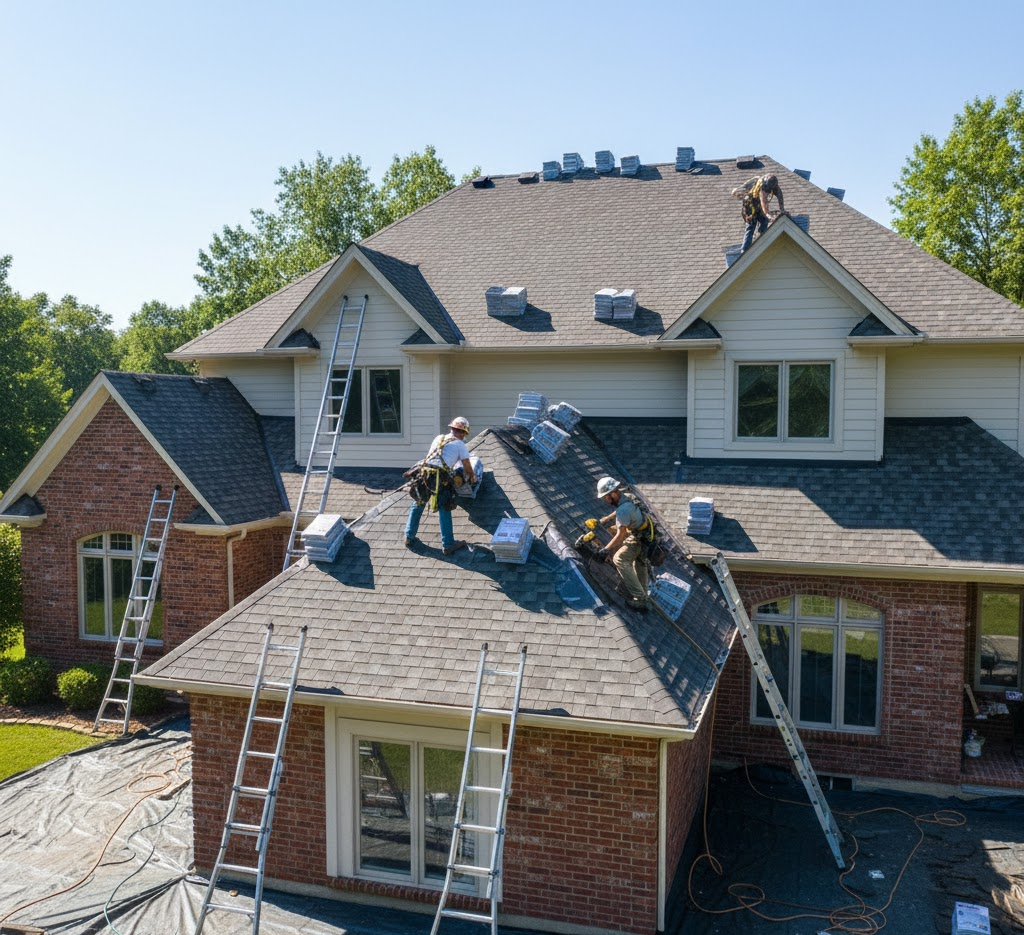
When a property owner stands in their driveway and looks up, they often see a simple expanse of shingles or metal. However, from the perspective of a structural engineer or a seasoned contractor, that surface represents a sophisticated thermal and moisture management system. A roof is the most stressed component of any building envelope, acting as the primary shield against kinetic energy from hail, thermal loading from UV radiation, and the relentless pressure of wind-driven rain.
In 2026, the standards for residential and commercial roof installations have evolved significantly. We are no longer simply “nailing down shingles.” Modern installations are exercises in material science and precision craftsmanship. At Rembrandt Roofing & Restoration, we recognize that a new roof is one of the most substantial investments a property owner will make. Understanding the variables that dictate the success or failure of that investment is the first step in ensuring that your new system provides decades of security rather than a few years of mere coverage.
The Strategic Decision: When Installation Becomes Essential
Determining whether to continue with repairs or commit to a full installation is often the most difficult part of property management. While localized fixes can extend the life of a roof temporarily, there is a point of diminishing returns where the structural integrity of the substrate begins to degrade.
The Cumulative Effect of Granular Erosion
Every asphalt shingle is manufactured with a protective layer of ceramic-coated granules. These granules serve two purposes: they provide color and, more importantly, they protect the volatile asphalt hydrocarbons from UV degradation. Once these granules begin to shed—evidenced by “sand” in the gutters—the shingle begins to dry out and curl. When this erosion becomes widespread across more than 30% of the surface, partial repairs are no longer viable. A full installation ensures that the entire protective “skin” of the home is uniform in its defensive capabilities.
Latent Decking Issues and Structural Safety
Often, the need for new roof installations isn’t visible from the ground. Moisture that has bypassed the shingles over several years can settle into the plywood decking or oriented strand board (OSB) beneath. This leads to delamination and “soft spots.” If you notice a wavy or uneven appearance to your roofline, it typically indicates that the structural decking has been compromised. In these scenarios, a new installation is not just an aesthetic upgrade; it is a structural necessity to prevent catastrophic failure during high-wind events or heavy snow loads.
Engineering the Shield: Components of a High-Performance Installation
A professional installation is a multi-layered assembly where each component depends on the one beneath it. If a single layer is skipped or installed incorrectly, the entire system’s warranty and effectiveness are put at risk.
The Critical Role of Underlayment
Decades ago, felt paper was the industry standard. Today, we utilize high-performance synthetic underlayments. These materials are non-breathable barriers that provide a secondary layer of protection against water ingress. In a premium roof installation, we pay special attention to “Ice and Water” shields—self-adhering membranes applied to eaves, valleys, and around penetrations. These membranes seal around every nail that passes through them, preventing water from backing up under the shingles due to ice dams or wind-driven rain.
Starter Strips and Wind Resistance
Many homeowners are surprised to learn that the most vulnerable part of a roof is the very edge. Without a dedicated “starter shingle” at the eaves and rakes, the first row of shingles lacks the adhesive bond necessary to resist uplift. A professional installation utilizes factory-made starter strips with high-strength adhesive lines, ensuring that the perimeter of the roof—the area most prone to wind damage—remains locked down even in severe weather.
Flashings: The Intersection of Planes
If a roof fails, it almost always fails at a transition. Whether it is a chimney, a dormer wall, or a plumbing vent, these “penetrations” require custom-fabricated flashing. We move away from the “caulk-heavy” approach of the past, focusing instead on mechanical flashing techniques. This involves “stepping” metal pieces between shingle courses and “counter-flashing” into masonry. By relying on gravity and the way water naturally sheds, rather than temporary chemical sealants, we ensure the junctions remain watertight for the life of the roof.
The Physics of Longevity: Ventilation and Thermal Management
One of the most overlooked aspects of roof installations is what happens underneath the shingles. An improperly ventilated roof is a roof that is dying from the inside out.
The Intake and Exhaust Balance
A roof needs to “breathe.” During the summer, attic temperatures can exceed 150°F if not properly vented. This extreme heat bakes the shingles from the bottom up, causing premature aging. In the winter, poor ventilation allows moisture from the living space to condense on the underside of the roof deck, leading to mold and wood rot.
A high-quality installation involves a calculated balance of intake (at the soffits) and exhaust (usually at the ridge). By maintaining a consistent airflow, we keep the attic temperature close to the ambient outside temperature, which preserves the shingle adhesive and protects the home’s insulation R-value.
Impact on Energy Efficiency
When Rembrandt Roofing & Restoration designs a new roofing system, we consider the home’s entire thermal envelope. Modern “cool” roofing materials are designed to reflect a higher percentage of solar energy. By combining these materials with a precision-engineered ventilation system, a new roof installation can significantly reduce the load on the home’s HVAC system, leading to lower utility costs throughout the year.
Material Selection: Matching Performance to Environment
Choosing the right material is not just about curb appeal; it is about matching the material’s physical properties to the local climate.
Architectural Laminate Shingles
These are the most common choice for modern residential roof installations. Unlike the flat “3-tab” shingles of the past, architectural shingles are composed of multiple layers of fiberglass and asphalt. This creates a dimensional look and, more importantly, provides superior wind resistance—often rated for gusts up to 130 mph.
Metal Roofing Systems
For property owners looking for a “lifetime” solution, metal is becoming increasingly popular in 2026. Whether it is a standing-seam system or stone-coated steel, metal roofs offer unparalleled fire resistance and shedding capabilities. While the initial investment is higher, the longevity and minimal maintenance requirements often make it the most cost-effective choice over a 50-year horizon.
Specialty Materials
In certain architectural contexts, synthetic slate or wood shakes provide the classic aesthetic of traditional materials without the high maintenance and weight requirements. These materials are engineered to be impact-resistant, making them ideal for areas prone to hail.
The Rembrandt Process: Precision in Execution
At Rembrandt Roofing & Restoration, we believe that the difference between an average roof and a masterpiece is in the details of the execution. Our process is designed to minimize disruption to the property owner while maximizing the lifespan of the system.
Tear-Off and Site Preparation
A “roof-over” (installing new shingles over old ones) is a practice we generally avoid. It traps heat, adds unnecessary weight to the structure, and prevents us from inspecting the decking for rot. We perform a clean tear-off down to the bare wood. During this process, we utilize specialized equipment to protect the home’s landscaping and siding, ensuring that the “debris field” is contained and managed.
Fastener Patterns and Quality Control
The strength of a roof is only as good as the nails holding it down. We adhere to strict “six-nail” fastening patterns, which provide enhanced wind warranties. More importantly, we ensure that nails are driven flush and into the “common bond” of the shingle—the thickest part where the layers overlap. High-nails or over-driven nails are common points of failure in amateur roof installations, which is why our project managers perform multi-point inspections throughout the day.
The Final Seal
Once the shingles are laid and the flashing is secured, we perform a final “grooming” of the roof. This includes ensuring all ridge caps are aligned and that any exposed fasteners (which are kept to an absolute minimum) are sealed with high-grade, UV-resistant solar sealants.
Protecting the Investment: Warranties and Documentation
A new roof should come with peace of mind. In 2026, the complexity of manufacturer warranties requires a contractor who is certified to provide extended coverage.
Workmanship vs. Material Warranties
It is vital for property owners to understand the difference. A material warranty covers defects in the shingles themselves, while a workmanship warranty covers the installation process. Because Rembrandt Roofing & Restoration maintains elite certifications with major manufacturers, we can often offer “integrated” warranties that cover both, providing a single point of accountability for the homeowner.
Documenting the Asset
Upon completion of a roof installation, we provide a comprehensive digital packet. This includes photos of the dry-deck, the underlayment installation, the flashing details, and the finished product. This documentation is invaluable for insurance purposes and for future property appraisals, as it proves that the roof was built to code and beyond.
The Value of Expertise over Expediency
In a market saturated with “storm chasers” and low-bid contractors, the value of a professional service provider cannot be overstated. A roof is a technical barrier, and its installation is a craft that requires years of experience to master.
When you choose Rembrandt Roofing & Restoration, you are not just buying shingles; you are hiring a team of restoration specialists who understand the nuances of structural integrity. We don’t cut corners because we know that on a roof, those corners are exactly where the water wants to go.
A new roof is a promise of safety to everyone who lives or works beneath it. Our mission is to ensure that promise is kept, using the best materials, the most rigorous standards, and a commitment to excellence that lasts long after the crew has left the site.