
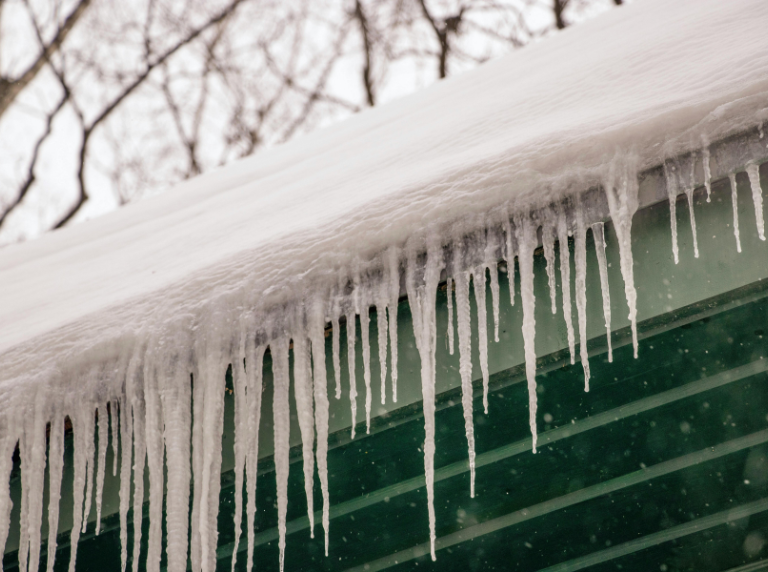
Water enters small cracks, freezes and expands, then thaws repeatedly throughout Ohio winters, widening gaps in shingles, flashing, and sealants. This cycle is particularly destructive in the Dayton area where temperatures fluctuate above and below freezing multiple times per winter. Each freeze-thaw event puts additional stress on your roofing materials, eventually leading to leaks, structural damage, and premature roof failure.
Understanding the Freeze-Thaw Process
The freeze-thaw cycle begins when water from rain, snow, or ice dams seeps into even the tiniest openings in your roofing system. When temperatures drop below 32°F, this trapped moisture freezes and expands by approximately 9% in volume. This expansion creates pressure that forces cracks wider, lifts shingle edges, and pushes apart sealant bonds.
When temperatures rise again—which happens frequently in Southwest Ohio’s unpredictable winters—the ice melts back into water. This newly enlarged space now allows even more water to enter during the next precipitation event. The cycle repeats dozens of times throughout a typical Dayton-area winter, with each repetition causing progressively worse damage.
In communities like Springboro, Centerville, and Beavercreek, homeowners often experience 30-50 freeze-thaw cycles between November and March. This repetitive expansion and contraction gradually destroys roofing materials that would otherwise last for decades.
Vulnerable Areas on Your Roof
Shingles and Granule Loss
Asphalt and architectural shingles—the most common roofing materials throughout Warren, Montgomery, and Butler Counties—are especially susceptible to freeze-thaw damage. The cycle loosens granules that protect the asphalt layer underneath, accelerating deterioration. Older homes in Kettering and Oakwood with 1990s-era shingles often show significant granule loss after repeated freeze-thaw seasons.
Lifted shingle tabs create entry points for water infiltration. Once water penetrates beneath shingles, it can freeze against the decking, causing even more extensive damage that may not become visible until spring.
Flashing Failures
Metal flashing around chimneys, skylights, and roof valleys depends on sealed connections to prevent water entry. Freeze-thaw cycles break down these seals and can warp the metal itself. In Miamisburg and Lebanon neighborhoods with homes from the 1950s-1970s, original flashing may already be compromised before winter weather accelerates its failure.
Gutters and Downspouts
While not technically part of your roof, gutters and downspouts contribute to freeze-thaw damage when they become clogged or damaged. Ice formation in blocked gutters creates ice dams that force water underneath shingles. Throughout West Chester and Mason’s newer subdivisions, even relatively young homes can experience ice dam problems if gutters aren’t properly maintained.
Signs of Freeze-Thaw Damage
Watch for these warning signs as winter transitions to spring in Southwest Ohio:
Visible exterior damage: Curling, cracking, or missing shingles; sagging areas; damaged flashing around penetrations
Interior evidence: Water stains on ceilings or walls, especially in attics; musty odors suggesting moisture accumulation; peeling paint near the roofline
Granule accumulation: Excessive shingle granules in gutters or around downspout outlets
Ice dam patterns: Icicles forming above exterior walls rather than at the roof edge, suggesting water backup under shingles
Many homeowners in Bellbrook and surrounding communities discover freeze-thaw damage only after filing insurance claims for what appears to be sudden storm damage, not realizing the deterioration occurred gradually over multiple seasons.
Preventing Freeze-Thaw Roof Damage
Pre-Winter Inspections
Schedule professional roof inspections each fall before temperatures start fluctuating. A qualified roofer can identify and repair vulnerable areas before winter weather exploits them. This preventive approach is particularly cost-effective for Dayton-area homeowners dealing with our challenging climate.
Adequate Attic Ventilation and Insulation
Proper attic ventilation keeps your roof deck closer to outdoor temperatures, reducing the likelihood of snow melting and refreezing at the roof edge. Many homes throughout the region lack adequate insulation, causing unnecessary freeze-thaw acceleration.
Prompt Repairs
Address minor issues immediately rather than waiting until spring. A small crack sealed in November prevents exponentially larger problems by March. Even quality architectural shingles deteriorate rapidly once the freeze-thaw cycle begins exploiting weaknesses.
Professional Gutter Maintenance
Clean gutters and ensure proper drainage before winter. Properly functioning gutters prevent water accumulation that contributes to ice dam formation and subsequent freeze-thaw damage.
When to Consider Roof Replacement
If your roof has endured 15-20 years of Southwest Ohio winters, freeze-thaw damage may indicate it’s time for replacement rather than continued repairs. Homes in Centerville, Springboro, and throughout Montgomery County with roofs installed in the early 2000s are reaching this critical decision point.
Modern roofing materials offer improved resistance to freeze-thaw cycles, better warranties, and enhanced energy efficiency that can offset replacement costs through lower heating and cooling bills.
Protect Your Investment with Professional Assessment
Don’t wait until freeze-thaw damage leads to interior water damage or structural problems. Rembrandt Roofing provides comprehensive roof inspections throughout Dayton, Springboro, Centerville, and all Southwest Ohio communities. Our experienced team understands how regional weather patterns affect your roof and can identify vulnerabilities before they become costly problems.
We also work directly with insurance adjusters when freeze-thaw damage is covered under your homeowner’s policy, streamlining the claims process and ensuring you receive fair compensation for necessary repairs or replacement.
Contact Rembrandt Roofing at https://rembrandtroofing.com today to schedule your professional roof inspection and protect your home from Ohio’s destructive freeze-thaw cycles.