
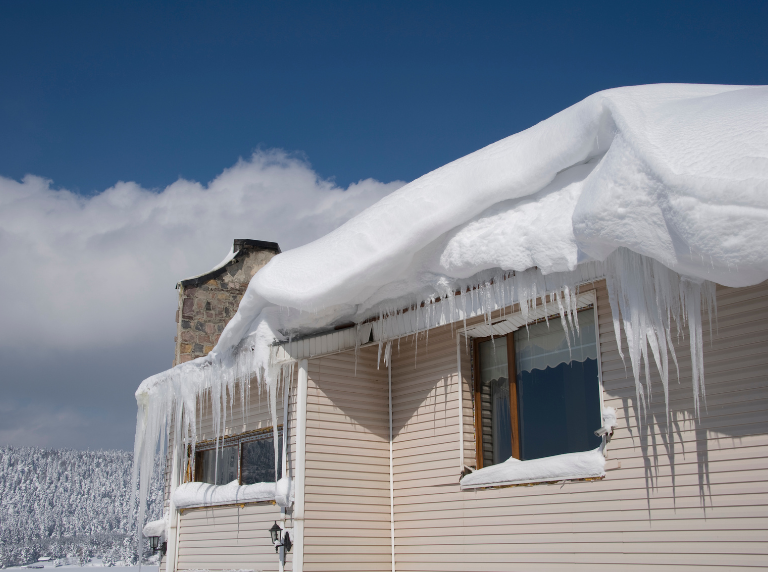
Clean gutters, trim branches, inspect and repair damaged shingles, check flashing, and ensure attic insulation and ventilation are adequate. These steps help prevent ice dams and winter damage common in the Dayton area when snow accumulation and freeze-thaw cycles stress roofing systems. Taking time to prepare your roof before winter arrives can save you from costly emergency repairs during Ohio’s coldest months.
Why Winter Roof Preparation Matters in Southwest Ohio
Southwest Ohio’s winter weather creates unique challenges for homeowners throughout Montgomery, Warren, and Butler Counties. Our region experiences repeated freeze-thaw cycles that can open small cracks into major leaks, heavy snow loads that stress aging roof structures, and ice dams that force water under shingles. Homes in Springboro, Centerville, Kettering, and surrounding communities—whether they’re newer subdivisions built in the 2000s or established neighborhoods from the 1960s and 70s—all need proper preparation to withstand winter conditions.
The investment you make in fall maintenance protects one of your home’s most critical systems and can prevent insurance claims that might affect your premiums. Many homeowners in the Dayton metro area discover winter damage only after it’s caused interior problems, making prevention far more cost-effective than emergency repairs during a January cold snap.
Essential Winter Roof Preparation Steps
Clean and Inspect Your Gutters
Clogged gutters rank among the top contributors to winter roof damage. When gutters fill with leaves and debris, water backs up and freezes along roof edges, creating ice dams that push moisture under shingles. Throughout Miamisburg, Beavercreek, and Lebanon, mature trees drop significant leaf coverage each fall, making thorough gutter cleaning essential.
Remove all debris from gutters and downspouts, then flush the system with water to ensure proper drainage. Check that downspouts direct water at least 6-8 feet away from your foundation. Consider installing gutter guards if you’re surrounded by trees, as they’ll reduce maintenance needs in future seasons.
Trim Overhanging Branches
Heavy snow and ice loads can bring down branches that damage shingles, gutters, and flashing. Walk your property and identify any limbs hanging within 6-10 feet of your roofline. This is particularly important in established neighborhoods in Oakwood, Bellbrook, and older Centerville areas where mature trees tower over homes.
Trim these branches before winter arrives, or hire a professional arborist for larger jobs. This prevents both immediate impact damage and the gradual wear caused by branches scraping across shingles during winter winds.
Conduct a Thorough Roof Inspection
From ground level with binoculars or by carefully accessing your roof (if safe), look for damaged, curling, or missing shingles. Pay special attention to areas around chimneys, skylights, and roof valleys where leaks commonly develop. Architectural shingles—the most common roofing material throughout Southwest Ohio—typically show their age through granule loss, cracking, or edges that curl upward.
Check all flashing around chimneys, vents, and roof edges for rust, gaps, or separation. Damaged flashing allows water infiltration that quickly worsens during freeze-thaw cycles. If your home in Mason, West Chester, or surrounding areas has metal roofing, inspect for loose fasteners or panels that could catch wind during winter storms.
Examine Attic Insulation and Ventilation
Proper attic conditions prevent ice dams and reduce heating costs throughout winter. Ice dams form when heat escaping through your roof melts snow, which then refreezes at colder roof edges. Check that your attic has adequate insulation (R-38 to R-49 for Ohio) and proper ventilation through soffit and ridge vents.
Look for signs of moisture problems like water stains, mold, or frost on the underside of roof decking. These indicate ventilation issues that need correction before winter. Homes built in the 1950s-1970s often have insufficient insulation by modern standards and benefit significantly from upgrades.
Address Minor Repairs Promptly
Small problems become major leaks when winter arrives. Replace damaged shingles, seal small cracks, and repair any flashing issues you’ve identified. If you’re uncomfortable working on your roof or identify significant problems, contact a professional roofer who serves the Dayton area before winter weather makes repairs more difficult and expensive.
When to Call Professional Roofing Experts
Some preparation tasks exceed DIY capabilities or safety limits. Steep roofs, multi-story homes, or significant damage all warrant professional inspection and repair. If your roof is approaching 15-20 years old—common for many homes built during the 1990s-2000s construction boom throughout Springboro, Centerville, and Kettering—a professional assessment can identify whether you’ll make it through another winter or should plan for replacement.
Professional roofers can spot subtle signs of damage that homeowners often miss, and they have the equipment to work safely in challenging conditions. Many insurance policies require professional documentation for storm damage claims, making it beneficial to establish a relationship with a trusted local roofing company before problems arise.
Take Action Before Winter Arrives
Don’t wait until the first snow forecast to prepare your roof. Schedule your inspection and maintenance during the mild fall weather that typically extends through November in Southwest Ohio. This timing gives you adequate time to complete repairs before winter conditions make roofing work difficult or impossible.
Rembrandt Roofing serves homeowners throughout Springboro, Centerville, Dayton, and surrounding Southwest Ohio communities with comprehensive roof inspections, maintenance, and repairs. Our team understands the specific challenges that Warren, Montgomery, and Butler County weather creates for your roofing system. Contact us today at https://rembrandtroofing.com to schedule your pre-winter roof inspection and ensure your home is protected throughout the cold months ahead.