
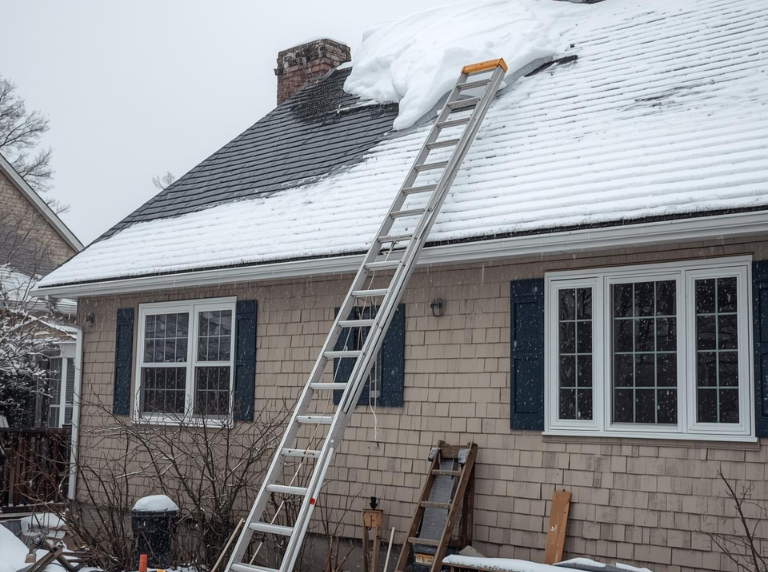
Emergency repairs can be done in winter, but full replacements are challenging when temperatures drop below 40°F because shingle sealant won’t activate properly. However, experienced Dayton-area contractors can perform winter work using special techniques when necessary for storm damage or severe leaks. Minor repairs like replacing a few shingles, sealing small leaks, or installing temporary protection are entirely feasible throughout Ohio’s winter months.
Understanding Winter Roofing Limitations
The primary challenge with winter roofing in Southwest Ohio isn’t just the cold—it’s how asphalt shingles behave in freezing temperatures. Architectural shingles, the most common roofing material throughout Springboro, Centerville, and surrounding communities, rely on a thermal-activated adhesive strip on their underside. This sealant needs sustained temperatures above 40°F to properly bond and create a weathertight seal.
When temperatures remain below this threshold, shingles become brittle and the adhesive won’t activate until warmer weather arrives. This means shingles installed in January might not fully seal until March or April, leaving your roof vulnerable to wind uplift during winter storms.
Additionally, cold shingles are prone to cracking when bent or nailed, making installation more difficult and increasing material waste. Ice, snow, and frozen underlayment create safety hazards for roofing crews, and shortened daylight hours limit productive work time during December and January.
When Winter Repairs Are Necessary
Despite these challenges, emergency situations don’t wait for spring. Warren, Montgomery, and Butler County homeowners often face urgent roofing issues during winter months that require immediate attention:
Storm Damage: High winds, ice storms, and occasional winter tornados can tear off shingles or damage flashing. These situations demand prompt repair to prevent water intrusion and interior damage.
Active Leaks: A leak discovered during winter needs addressing immediately, even if it’s a temporary fix until comprehensive repairs can be completed in warmer weather.
Insurance Claims: When storm damage occurs, insurance adjusters typically require repairs within a reasonable timeframe. Waiting months until spring may jeopardize your claim or lead to additional damage that won’t be covered.
Real Estate Transactions: Home inspections revealing roofing issues during winter sales in communities like Mason, West Chester, or Beavercreek may require immediate repairs to close the transaction.
Winter Roofing Techniques That Work
Experienced contractors serving the Dayton metro area have adapted techniques for cold-weather repairs:
Hand-Sealing Shingles
Professional roofers manually apply roofing cement under each shingle tab to ensure immediate adhesion rather than waiting for thermal activation. This labor-intensive process provides secure attachment regardless of temperature.
Controlled Installation Conditions
Contractors monitor weather forecasts carefully, scheduling work during temperature breaks. Even in January, Southwest Ohio often experiences several days reaching the mid-40s or higher—sufficient windows for quality installations.
Material Storage
Storing shingles in heated spaces before installation keeps them pliable and less prone to cracking. Professional crews bring materials to the jobsite gradually rather than exposing entire pallets to freezing temperatures.
Temporary vs. Permanent Solutions
For severe winter conditions, experienced roofers might recommend temporary weatherproofing—like tarp installations or emergency patching—to protect your home until spring allows for permanent repairs. This approach is particularly common for larger projects requiring complete tear-offs.
What Winter Repairs Are Most Feasible
Certain roofing work adapts better to cold weather:
- Replacing isolated damaged shingles from a recent storm
- Repairing or replacing flashing around chimneys, vents, and valleys
- Sealing small leaks with roofing cement and caulking
- Installing ice and water shield in problem areas
- Emergency tarping to prevent immediate water damage
- Minor repairs on metal roofing, which isn’t temperature-sensitive like asphalt shingles
The older housing stock in neighborhoods throughout Kettering, Miamisburg, and Oakwood often develops winter issues around aging chimney flashing or deteriorated valleys—repairs that can typically be addressed even in cold conditions.
Planning Ahead for Spring
If your roofing issue isn’t an emergency, winter is actually an excellent time to plan spring work. Contractors often have more availability for consultations and estimates during slower months. You can schedule projects for early spring, potentially securing better pricing and guaranteed completion dates before the busy season.
For homes with older roofs that survived another winter but are approaching the end of their 20-25 year lifespan, getting on a contractor’s spring schedule in January or February ensures timely replacement before summer storm season.
Trust Local Expertise for Winter Roofing Needs
Whether you’re facing an emergency leak in Lebanon, storm damage in Bellbrook, or planning ahead for spring replacement in Springboro, working with experienced local contractors makes all the difference. Rembrandt Roofing understands Southwest Ohio’s unique climate challenges and has the expertise to assess whether your situation requires immediate winter intervention or can wait for optimal conditions.
Don’t let winter roofing concerns go unaddressed. Contact Rembrandt Roofing at https://rembrandtroofing.com for a professional assessment of your roof’s condition and honest recommendations about timing and approach. We serve homeowners throughout Warren, Montgomery, and Butler Counties with transparent guidance and quality workmanship year-round.