
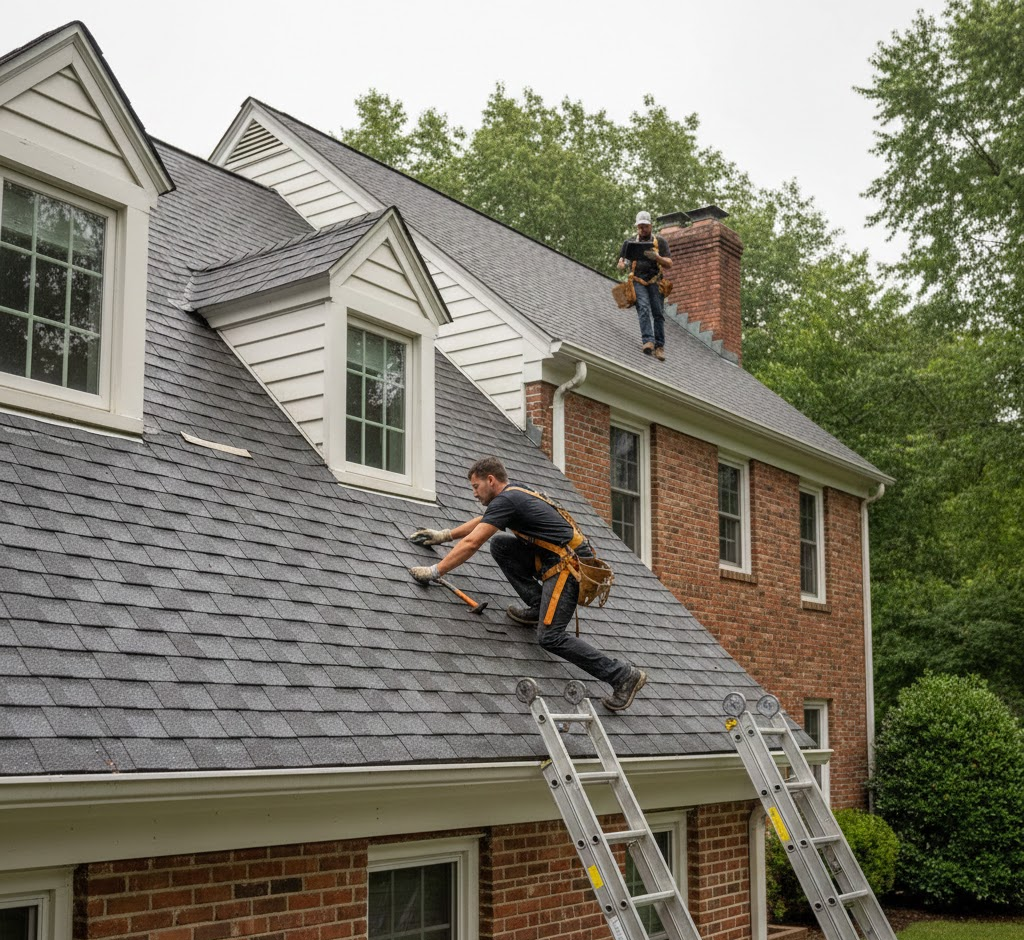
Imagine a quiet evening at home when a steady, rhythmic tapping draws your attention toward the ceiling. It isn’t the sound of settling floorboards or a distant appliance. It is the sound of water finding a path where none should exist. For many homeowners, this is the moment—the sudden, sinking realization that a minor oversight has evolved into a pressing structural concern.
A roof is far more than a decorative cap on a house; it is a complex, multi-layered system designed to manage thermal energy, divert thousands of gallons of runoff, and withstand the relentless pressure of the elements. When that system falters, the ripple effects can touch every corner of your property, from the integrity of your attic insulation to the air quality within your living spaces. At Rembrandt Roofing & Restoration, we believe that understanding the nuances of roof repair is the first step toward long-term property preservation.
Effective maintenance isn’t just about stopping a leak; it’s about restoring the engineered harmony of your home’s primary defense.
The Anatomy of a Vulnerability: Why Roofs Fail
To address a repair effectively, one must first understand the mechanics of failure. Most property owners view their roof as a collection of shingles, but shingles are merely the “skin” of the operation. Beneath them lies a series of critical components—underlayment, flashing, decking, and ventilation—that must all function in unison.
Thermal Expansion and Contraction
Materials are constantly in motion. As the sun beats down during the day and temperatures drop at night, roofing components expand and contract. Over time, this “thermal shock” can cause shingles to become brittle and fasteners to back out. When nails “pop,” they create a direct conduit for moisture to enter the decking. Identifying these small breaches before they become cascading failures is the hallmark of a proactive roof repair strategy.
The Role of Flashing in Water Diversion
The most common sites for leaks aren’t usually in the middle of a shingle field; they occur at transitions. Chimneys, skylights, dormers, and valleys are all areas where different planes of the roof meet. These junctions are protected by flashing—thin strips of metal (usually aluminum or copper) designed to direct water away from the seam. If flashing is poorly installed, corroded, or pulled away by high winds, the “seal” of the home is broken.
Granule Loss and UV Degradation
Shingles are coated with ceramic granules for more than just color; these granules protect the underlying asphalt from ultraviolet (UV) radiation. Once the granules begin to shed—often visible as “sand” in your gutters—the asphalt becomes exposed to the sun’s drying effects. This leads to cracking and curling, which compromises the shingle’s ability to shed water efficiently.
Identifying the Hidden Signs of Distress
While a dripping ceiling is an obvious indicator, many roofing issues remain invisible to the untrained eye for months or even years. Recognizing these subtle red flags can save a homeowner thousands of dollars by allowing for a targeted repair rather than a premature total replacement.
The “Shadow” on the Siding
Sometimes, the evidence of a roof leak doesn’t appear on the ceiling. Water often travels along the underside of rafters or behind walls before it manifests. If you notice dark streaks or “ghosting” on your exterior siding or interior walls near the ceiling line, it often indicates that the step flashing where the roof meets a vertical wall has failed.
Granule Accumulation in Downspouts
As mentioned, granules are the armor of your roof. While some shedding is normal for a brand-new roof, an older roof that is dumping significant amounts of grit into the gutters is signaling that the shingles are reaching the end of their functional life. This doesn’t always mean a full replacement is necessary, but it does mean that specific high-wear areas may require immediate roof repair to extend the system’s longevity.
Unexpected Increases in Energy Bills
Your roof is a vital component of your home’s thermal envelope. If your attic ventilation is blocked or if moisture has compromised your insulation, your HVAC system will have to work harder to maintain a consistent temperature. A spike in cooling costs during the summer often points toward a “hot roof,” where heat is trapped in the attic due to poor airflow or structural damage.
The Technical Execution of Professional Repair
When Rembrandt Roofing & Restoration approaches a project, we look beyond the immediate hole. A professional-grade repair involves a forensic analysis of the surrounding area to ensure the fix is permanent.
Proper Shingle Integration
One of the most common mistakes in DIY or “handyman” repairs is the “over-shingling” method. Simply nailing a new shingle over an old one creates a hump that allows wind-driven rain to blow underneath. A correct repair involves carefully breaking the sealant bond of the surrounding shingles, removing the damaged pieces down to the deck, and weaving the new material into the existing pattern to maintain the “shedding” effect.
Addressing the Decking and Underlayment
If a leak has been active for any length of time, the plywood decking underneath may be compromised. Soft spots or “spongy” sections of the roof indicate wood rot. A high-quality roof repair must include the inspection and, if necessary, the replacement of these structural boards. Ignoring the deck and simply replacing shingles is like putting a fresh coat of paint on rusted metal; the underlying decay will continue to spread.
Sealant Selection and Application
Modern roofing relies heavily on high-performance polymer sealants. However, these are not “catch-all” solutions. A professional contractor knows when to use a tri-polymer sealant versus a traditional roofing cement. Over-reliance on “caulk” is often a sign of a temporary fix. True repairs rely on mechanical flashing and gravity-fed water shedding, with sealants serving as a secondary line of defense.
The Economic Reality: Repair vs. Replacement
A significant concern for property owners is determining when a repair is a wise investment and when it is merely “throwing good money after bad.” This decision-making process requires a balanced look at the roof’s age, the extent of the damage, and the long-term goals for the property.
The 30% Rule
Generally, if the damage is localized to less than 25-30% of the total roof surface, a repair is often the most cost-effective and logical path. This is especially true if the rest of the roof is in relatively good condition. However, if multiple leaks are occurring in different sections simultaneously, it may indicate a systemic failure of the materials.
Assessing the Remaining Life Cycle
Most asphalt shingle roofs are designed to last 20 to 25 years. If your roof is only 10 years old and suffered wind damage during a storm, a repair is an excellent way to restore the system to its full life expectancy. Conversely, if a roof is 22 years old and showing signs of widespread wear, a repair might only buy you a few months of safety. At Rembrandt Roofing & Restoration, our goal is to provide honest assessments that prioritize the homeowner’s budget and the building’s safety.
Environmental and Structural Consequences of Delay
The cost of a roof repair is almost always lower than the cost of the damage caused by ignoring it. Water is a patient intruder; once it enters the home, it triggers a chain reaction of deterioration.
Mold and Air Quality
Moisture trapped in an attic creates the perfect environment for mold and mildew growth. These spores can enter the home’s ventilation system, potentially leading to respiratory issues for the inhabitants. What starts as a small roof leak can quickly become a full-scale environmental remediation project.
Structural Weakening
Rafters, joists, and wall studs are the “bones” of your home. When these wood components are repeatedly exposed to moisture, they undergo a process of cellular breakdown known as wood rot. Over time, this can lead to sagging rooflines and, in extreme cases, partial structural collapse.
Fire Hazards
It may seem counterintuitive that a water leak could cause a fire, but it is a real risk. Most homes have electrical wiring running through the attic or ceiling joists. If water tracks along a wire and enters a junction box or a light fixture, it can cause a short circuit, leading to a fire.
The Importance of Professional Documentation
In 2026, the landscape of home ownership and insurance is more complex than ever. When a roof is damaged—whether by age or an act of nature—the quality of the documentation provided by your contractor can make a significant difference in insurance claims and property valuations.
Professional roof repair should always be accompanied by:
- A Detailed Assessment: Identifying the exact cause of failure.
- Photo Documentation: Before, during, and after photos of the repair process.
- Material Specifications: Clarifying that the materials used match or exceed the quality of the original installation.
Having a clear paper trail from a reputable company like Rembrandt Roofing & Restoration ensures that when you eventually sell your home, you can prove that the roof has been meticulously maintained.
Seasonal Maintenance: The Best Defense
The most effective way to avoid a major roof repair is through a structured maintenance schedule. Roofs should be inspected at least twice a year—once in the spring and once in the autumn—to prepare for the extreme temperatures and precipitation of the coming months.
Spring Inspections
After the weight of winter snow and the stress of freezing cycles, a spring inspection looks for “ice dam” damage and shingles that may have been lifted by heavy winds. It’s also the time to ensure that gutters are clear so that spring rains can flow freely away from the foundation.
Autumn Preparations
Before the first freeze, it is critical to ensure that all flashing is secure and that there are no gaps where pests could enter the attic to seek warmth. Clearing debris from valleys is also essential, as wet leaves can trap moisture against shingles and accelerate decay.
Choosing the Right Partner for Your Home
Not all roofing companies are created equal. When your home’s integrity is on the line, you need more than a “guy with a ladder.” You need a restoration specialist who understands the physics of moisture migration and the chemistry of modern roofing materials.
At Rembrandt Roofing & Restoration, we approach every roof repair with the same level of precision we would apply to a full-scale installation. We understand that your home is likely your most significant investment, and the roof is the guard dog that protects it. Our team is trained to identify the root cause of issues, not just patch the symptoms.
Whether you are dealing with a minor leak, storm damage, or general wear and tear, we invite you to experience the difference that professional craftsmanship and honest communication can make. Your roof deserves a masterpiece of protection, and that is exactly what we provide.