
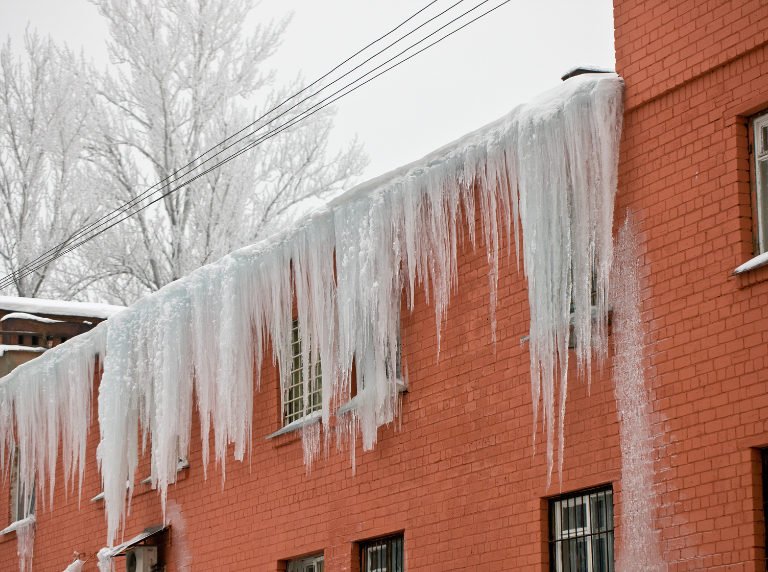
Ice dams form when heat escaping through your roof melts snow, which then refreezes at the eaves where the roof is colder, creating a barrier that traps water. This trapped water backs up under your shingles and can leak into your home, causing damage to ceilings, walls, and insulation. In Southwest Ohio, where we experience frequent freeze-thaw cycles throughout winter, proper attic insulation, ventilation, and air sealing are essential to prevent ice dams. Understanding how ice dams develop and taking preventive measures can save homeowners in Springboro, Centerville, Dayton, and surrounding areas thousands of dollars in water damage repairs.
Understanding How Ice Dams Form
The ice dam cycle begins in your attic, not on your roof. When warm air from your living spaces leaks into the attic, it heats the roof deck from below. This warmth melts the bottom layer of snow on your roof, even when outdoor temperatures remain below freezing. The melted water runs down the roof until it reaches the eaves—the overhang portion that extends beyond your home’s exterior walls.
Since the eaves don’t have heated living space beneath them, they stay cold. When the melted water reaches this cold zone, it refreezes, gradually building up a ridge of ice along the edge of your roof. As this process continues, the ice dam grows larger, creating a barrier that prevents additional snowmelt from draining off the roof.
With nowhere to go, water pools behind the ice dam and begins working its way under your shingles. Asphalt and architectural shingles—the most common roofing materials throughout Warren, Montgomery, and Butler Counties—are designed to shed water flowing downward, not to be waterproof against standing water. Once water penetrates beneath the shingles, it can soak through underlayment, saturate attic insulation, and eventually drip into your home’s interior spaces.
Why Southwest Ohio Homes Are Vulnerable
Our regional climate creates ideal conditions for ice dam formation. Unlike areas with consistently cold winters, Southwest Ohio experiences frequent temperature fluctuations. A week of below-freezing temperatures allows snow to accumulate, then a brief warming period or sunny days create melt conditions, followed by another cold snap that refreezes everything.
Many homes in older Dayton-area neighborhoods like Oakwood, as well as subdivisions built in Kettering, Miamisburg, and Beavercreek during the 1950s-1970s, were constructed before modern insulation standards. These homes often have insufficient attic insulation and numerous air leakage points. Even newer homes in West Chester, Mason, and Lebanon developments can experience ice dams if insulation wasn’t installed properly or has settled over time.
Prevention Strategies That Work
Improve Attic Insulation
The first line of defense is adequate attic insulation. Most Southwest Ohio homes should have at least R-38 to R-49 insulation in the attic floor, which translates to roughly 12-16 inches of blown fiberglass or cellulose. Check your current insulation depth—if you can see the tops of your ceiling joists, you need more.
Proper insulation keeps heat in your living spaces where it belongs rather than allowing it to warm the roof deck. This maintains a more uniform roof temperature that prevents snow melting in the first place.
Seal Air Leaks
Insulation alone isn’t enough. Air leakage from your living spaces into the attic bypasses insulation and delivers warm air directly to the roof deck. Common leakage points include recessed lights, attic hatches, plumbing penetrations, chimney chases, and gaps around furnace flues.
Professional air sealing addresses these vulnerabilities before adding insulation. This is particularly important in two-story homes common throughout Centerville and Springboro, where stack effect creates strong pressure differences that push warm air upward.
Ensure Proper Attic Ventilation
A well-ventilated attic allows cold outdoor air to circulate, keeping the roof deck close to outdoor temperature. Your attic should have both intake ventilation (typically soffit vents along the eaves) and exhaust ventilation (ridge vents, gable vents, or roof vents near the peak).
The intake and exhaust must work together to create airflow. Many homes have adequate exhaust vents but blocked soffit vents due to insulation installation that covers the soffit areas. When adding insulation, proper baffles should be installed to maintain an air channel from soffit to ridge.
Consider Ice and Water Shield
For homes with a history of ice dam problems, installing ice and water shield membrane during roof replacement provides an extra layer of protection. This self-sealing waterproof membrane applied to the roof deck at eaves, valleys, and other vulnerable areas prevents water penetration even if it gets under shingles.
When Rembrandt Roofing replaces roofs throughout the Dayton metro area, we discuss ice and water shield options with homeowners based on their home’s specific risk factors and history.
Warning Signs and Immediate Actions
During winter, watch for these ice dam indicators: icicles hanging from eaves (especially large ones), ice buildup at roof edges, water stains on exterior walls under the roofline, or interior ceiling stains near exterior walls. If you notice water stains inside your home during winter, contact a roofing professional immediately—active leaks can cause extensive damage quickly.
Never attempt to chip away ice dams with tools, as you’ll likely damage shingles. If you have an active ice dam causing leaks, a roofing professional can safely apply calcium chloride ice melt (never rock salt) or use low-pressure steam to create channels for water drainage.
Schedule Your Ice Dam Prevention Assessment
Don’t wait until water is dripping through your ceiling. Rembrandt Roofing provides comprehensive attic and roof assessments throughout Springboro, Centerville, Dayton, Bellbrook, and all surrounding Southwest Ohio communities. We’ll evaluate your insulation levels, ventilation system, and roof condition to identify vulnerabilities before they cause expensive damage.
Contact Rembrandt Roofing today at https://rembrandtroofing.com to schedule your prevention assessment. Protecting your home from ice dams is far more affordable than repairing water damage—let our experienced team help you weatherproof your home for Southwest Ohio winters.