
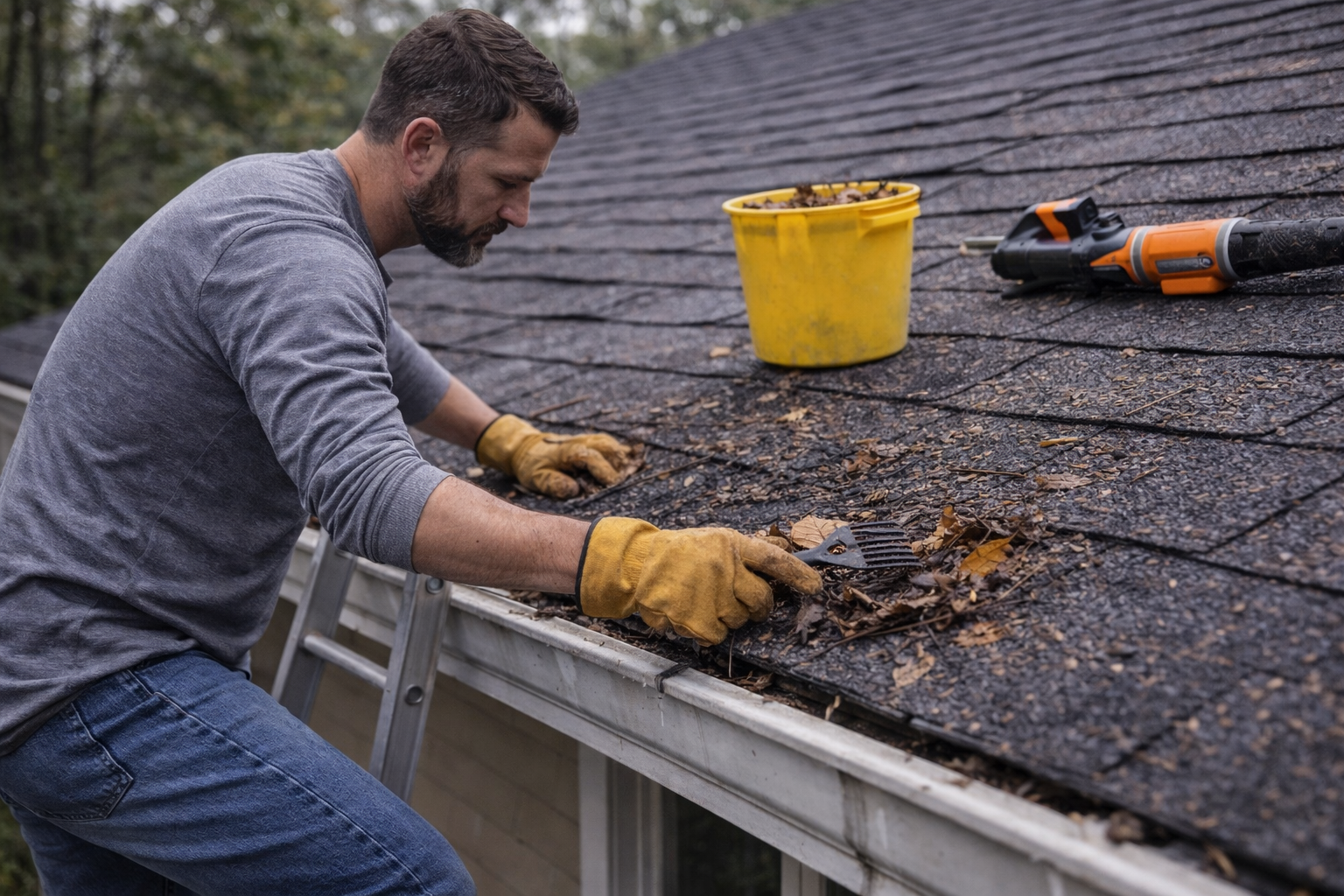
Keep gutters clean, trim overhanging branches, check for missing or damaged shingles after storms, and ensure attic ventilation is unobstructed. In Southwest Ohio, seasonal maintenance before winter and after spring storm season helps prevent minor issues from becoming major problems. Regular homeowner inspections combined with professional evaluations create the best defense against costly roof repairs in our challenging Midwest climate.
Why Between-Inspection Maintenance Matters in Southwest Ohio
Southwest Ohio’s weather patterns create unique challenges for residential roofing systems. The freeze-thaw cycles we experience throughout winter, combined with spring hail storms and humid summer conditions, can accelerate roof deterioration. Homes throughout Springboro, Centerville, Dayton, and surrounding Warren, Montgomery, and Butler County communities face these same climate stresses, making proactive maintenance essential.
While professional roof inspections should occur annually or after significant weather events, homeowners who perform regular visual checks and simple maintenance tasks can catch problems early—often before they cause interior damage or require insurance claims.
Monthly Visual Inspections: What to Look For
Ground-Level Observations
You don’t need to climb onto your roof to spot many common problems. From ground level, use binoculars to examine:
Shingle condition: Look for curling edges, missing granules (which appear as dark or discolored patches), or individual shingles that appear to be lifting or missing entirely. The architectural shingles common throughout Miamisburg, Kettering, and Mason are particularly vulnerable to wind damage during severe storms.
Flashing integrity: Check the metal flashing around chimneys, vents, and where roof planes meet. Gaps, rust, or separated sections can allow water infiltration.
Sagging or uneven areas: Any dips or sags in your roofline may indicate structural issues requiring immediate professional attention.
Gutter and Downspout Maintenance
Clean gutters are critical to roof longevity. Clogged gutters cause water to back up under shingles, leading to rot and leaks. In Southwest Ohio’s tree-lined neighborhoods—especially in established areas of Beavercreek, Lebanon, and Oakwood—gutters require cleaning at least twice yearly: once after fall leaf drop and again in late spring.
Check that downspouts direct water at least 5-6 feet away from your foundation. Standing water near your home’s base can cause basement issues and compromise the structural integrity that supports your roof system.
Seasonal Maintenance Calendar
Spring (April-May)
After Southwest Ohio’s notoriously unpredictable spring storm season, conduct a thorough inspection. March and April often bring hail and high winds to the Dayton metro area. Look for:
- Dents in metal flashing, gutters, or vents (hail indicators)
- Scattered granules in gutters
- Damaged or missing shingles
- Debris accumulation in valleys
Document any storm damage with photos immediately—this documentation proves valuable when filing insurance claims.
Summer (June-August)
High humidity and heat can reveal ventilation problems. From inside your attic:
- Check for adequate airflow through soffit and ridge vents
- Look for moisture, mold, or mildew
- Verify insulation remains dry and properly positioned
- Ensure exhaust fans vent outside, not into the attic space
Poor ventilation reduces shingle lifespan and increases cooling costs—a significant concern during humid Ohio summers.
Fall (September-November)
Prepare your roof for winter by:
- Removing all debris, especially in valleys where leaves accumulate
- Trimming tree branches that hang within 6-10 feet of your roof
- Cleaning gutters thoroughly before winter weather arrives
- Checking attic ventilation remains unobstructed
Overhanging branches pose particular risks during winter ice storms, which can bring down limbs and damage roofing throughout West Chester, Bellbrook, and surrounding communities.
Winter (December-March)
While you shouldn’t walk on your roof during winter, monitor for:
- Ice dams forming along eaves (indicating ventilation or insulation problems)
- Icicles larger than a few inches (suggesting heat loss)
- Interior ceiling stains or drips after snow melts
What NOT to Do
Never walk on your roof unless you have proper safety equipment and experience. This is especially important with older homes from the 1950s-1970s found throughout the region, which may have brittle or weakened shingles.
Avoid pressure washing your roof, as this strips protective granules from asphalt shingles and shortens their lifespan.
Don’t attempt DIY repairs for anything beyond replacing a single shingle. Improper repairs often cause more damage and may void manufacturer warranties.
When to Call Rembrandt Roofing
Between-inspection maintenance helps you identify when professional help is needed. Contact us immediately if you notice:
- Multiple missing or damaged shingles
- Active leaks or water stains inside your home
- Significant storm damage from hail or wind
- Sagging areas or structural concerns
- Widespread granule loss
Schedule Your Professional Inspection Today
While homeowner maintenance is valuable, it doesn’t replace professional inspections. Rembrandt Roofing provides comprehensive roof evaluations throughout Springboro, Centerville, Dayton, and all surrounding Southwest Ohio communities. Our experienced team identifies problems you might miss and provides honest assessments that help you make informed decisions about repairs or replacement.
Contact Rembrandt Roofing at https://rembrandtroofing.com to schedule your professional roof inspection. We’ll help you protect your home and maximize your roof’s lifespan through proper maintenance and timely repairs.