
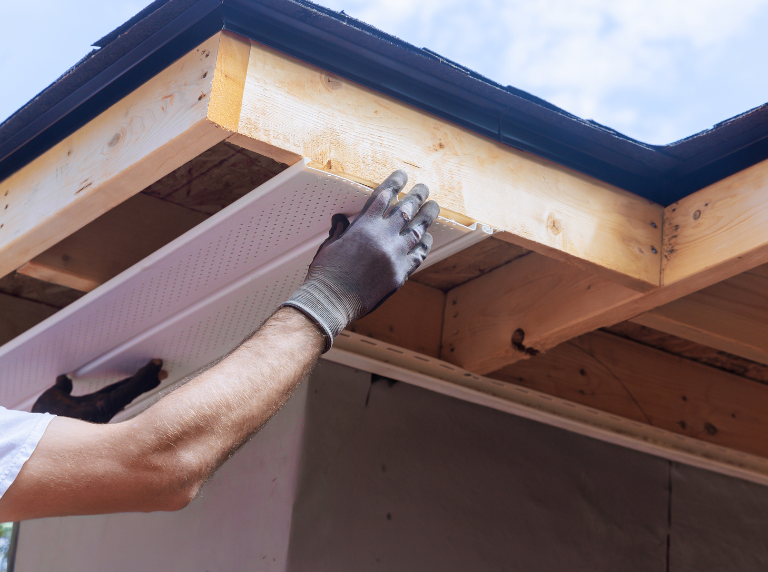
Soffit is the underside of your roof overhang, and fascia is the vertical board along the roof edge where gutters attach. Both protect your roof structure from weather and provide ventilation, and damage to these components is common in older homes throughout Kettering and Springboro. These seemingly minor elements play a crucial role in preventing moisture damage, controlling attic ventilation, and maintaining your home’s curb appeal and structural integrity.
Understanding Soffit: Your Roof’s Hidden Protector
The soffit spans the space beneath your roof’s overhang, connecting the exterior wall to the roofline. Most homeowners in Centerville and Dayton never think about this component until problems arise, but it serves several critical functions.
Soffit provides essential ventilation for your attic space. Most modern soffits include small perforations or vents that allow air to flow into your attic, working in conjunction with ridge vents or gable vents to create proper circulation. This ventilation is especially important during Southwest Ohio’s humid summers, when trapped heat and moisture can lead to mold growth, wood rot, and premature shingle failure.
Additionally, soffit protects the exposed rafter tails and roof framing from weather elements. Without proper soffit coverage, the freeze-thaw cycles common in Warren and Montgomery Counties can cause significant structural damage to these vulnerable wooden components.
What Is Fascia and Why Does It Matter?
Fascia is the vertical finishing board mounted at the point where your roof meets your home’s outer walls. This board runs along the lower edge of your roof and provides the mounting surface for your gutters. In Miamisburg and surrounding areas, fascia boards are typically made from wood, vinyl, or aluminum.
The fascia serves as the first line of defense against water intrusion along your roofline. When functioning properly, it directs water into your gutters and away from your home’s structure. However, when fascia becomes damaged or deteriorated, water can seep behind it and into your roof decking, causing rot that extends into your home’s structural components.
Fascia also provides a finished aesthetic look to your roofline and helps support the lower edge of your bottom row of shingles. Many homeowners in Mason and West Chester discover fascia damage only after noticing sagging gutters or visible water stains along their roofline.
Common Problems Affecting Soffit and Fascia in Southwest Ohio
Weather-Related Damage
The Dayton metro area experiences weather conditions that are particularly harsh on soffit and fascia. Spring and summer hail storms can crack or puncture soffit panels and dent aluminum fascia. High winds from severe thunderstorms and occasional tornado activity can tear these components loose entirely.
Winter freeze-thaw cycles pose another significant threat. When ice dams form along your roofline, water backs up behind gutters and can saturate fascia boards, leading to rot. Many homes built in the 1950s through 1970s in Kettering and Oakwood have original wooden fascia that’s particularly vulnerable to this type of damage.
Pest Infiltration
Damaged or deteriorating soffit creates entry points for birds, squirrels, raccoons, and insects. Once pests access your attic through compromised soffit, they can cause extensive damage to insulation, wiring, and structural components. This is especially common in older Beavercreek and Bellbrook neighborhoods where original soffit materials have begun to fail.
Poor Ventilation and Moisture Issues
Blocked or inadequate soffit vents restrict airflow into your attic, creating moisture problems that affect your entire roofing system. In Lebanon and surrounding Butler County areas, we frequently encounter attic mold and premature shingle failure traced directly to inadequate soffit ventilation.
Signs Your Soffit or Fascia Needs Attention
Walk around your home regularly and look for these warning signs:
- Peeling paint or visible rot on fascia boards
- Sagging or separated soffit panels
- Water stains on soffit or exterior walls
- Holes or cracks in soffit material
- Sagging gutters pulling away from the roofline
- Evidence of pest activity near your roofline
- Visible daylight through soffit when viewed from your attic
Materials and Replacement Options
Modern soffit and fascia materials offer improved durability compared to older options. Vinyl soffit provides excellent weather resistance and requires minimal maintenance, making it popular in newer Springboro and Centerville subdivisions. Aluminum fascia offers superior durability and paint retention.
For homes with historical character in Oakwood or older Dayton neighborhoods, wood fascia and soffit can be restored or replaced to maintain architectural authenticity while incorporating modern ventilation standards.
Working With Insurance on Storm Damage
Southwest Ohio’s severe weather means soffit and fascia damage often qualifies for insurance claims. Hail damage, wind damage, and storm-related water intrusion are typically covered perils. When filing a claim, documentation is crucial—photograph all damage before making repairs.
Rembrandt Roofing has extensive experience working with insurance adjusters throughout Warren, Montgomery, and Butler Counties to ensure homeowners receive fair settlements for storm damage to these essential roofing components.
Schedule Your Soffit and Fascia Inspection Today
Don’t wait until minor soffit and fascia issues become major structural problems. The experienced team at Rembrandt Roofing provides comprehensive roofing inspections throughout Springboro, Centerville, Dayton, and all surrounding Southwest Ohio communities. We’ll assess the condition of your soffit, fascia, and entire roofing system, providing honest recommendations and competitive pricing for any necessary repairs or replacements.
Contact Rembrandt Roofing at https://rembrandtroofing.com today to schedule your free roofing inspection and protect your home’s most important investment.