
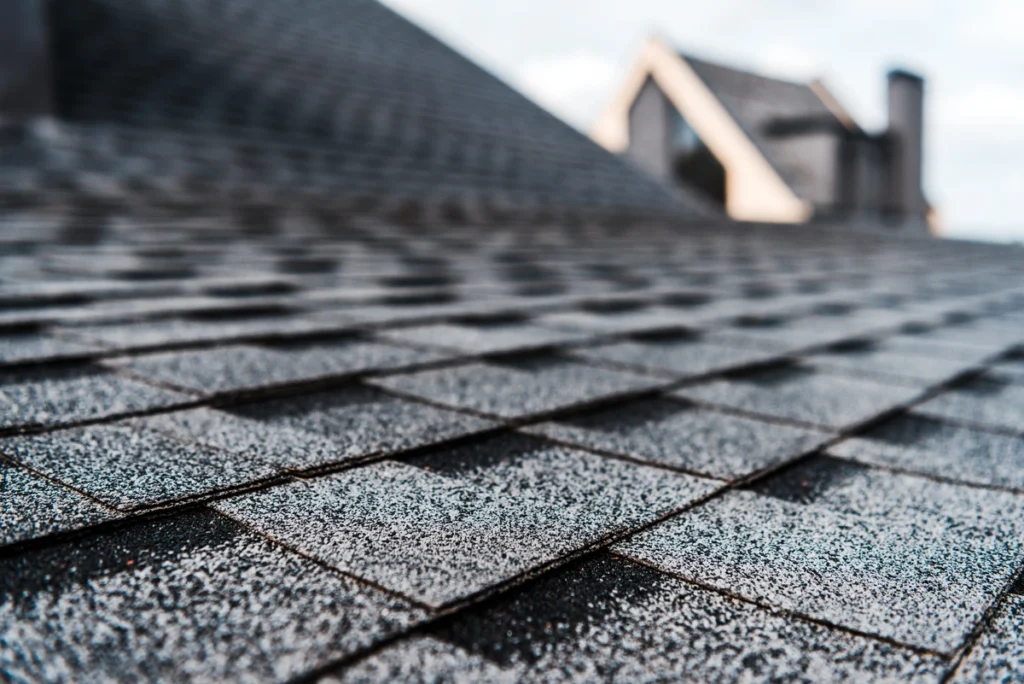
Granule loss occurs naturally with age, but accelerated loss indicates hail damage, manufacturing defects, or excessive heat from poor ventilation. Finding significant granules in gutters on homes in Mason or West Chester, especially after storms, signals your shingles’ protective layer is compromised. While some granule shedding is normal during the first year after installation, excessive loss at any point threatens your roof’s ability to protect your home from Southwest Ohio’s unpredictable weather patterns.
Understanding Shingle Granules and Their Purpose
Asphalt shingle granules are tiny ceramic-coated rock particles embedded in the surface of your roofing material. These granules serve critical functions beyond aesthetics. They protect the underlying asphalt layer from harmful UV radiation, provide fire resistance, reflect heat to improve energy efficiency, and create the color variations that give your roof its appearance.
Without adequate granule coverage, the asphalt binder becomes exposed to direct sunlight and weather elements. This exposure accelerates deterioration, leading to cracking, warping, and eventual failure of the shingles themselves. For homeowners throughout Springboro, Centerville, and surrounding Warren County communities, understanding what causes premature granule loss can save thousands in unnecessary roof replacement costs.
Natural Aging and Expected Granule Loss
All asphalt shingles experience some granule loss throughout their lifespan. Newly installed roofs typically shed excess granules during the first few months as loose particles wash away during rain events. This is completely normal and doesn’t indicate a problem with your Dayton-area roof installation.
As shingles age beyond their 15-20 year mark, gradual granule loss becomes more pronounced. The adhesive bonds weaken naturally over time, particularly on south and west-facing slopes that receive maximum sun exposure. If your Kettering or Miamisburg home was built in the 1990s or early 2000s with the original roof still in place, increased granule accumulation in gutters may simply indicate your roof is approaching the end of its serviceable life.
Storm Damage: The Leading Cause of Premature Granule Loss
Southwest Ohio’s volatile weather patterns create perfect conditions for accelerated shingle damage. Hail storms pose the most significant threat to granule integrity. Even small hail stones traveling at high velocity can knock granules loose on impact, creating distinctive circular patterns of exposed asphalt across affected shingles.
The Dayton metro area experiences periodic severe weather events each spring and summer, with communities like Beavercreek, Bellbrook, and Lebanon particularly susceptible to hail damage. After any significant storm, homeowners should inspect their gutters and downspouts for sudden increases in granule accumulation. Finding what looks like coarse sand or fine gravel—often with varied colors matching your roof—is a clear warning sign.
High winds accompanying thunderstorms and occasional tornadoes can also strip granules through abrasion. When shingles flap or rub against each other during wind events, the mechanical action loosens and removes granules even without hail present.
Poor Ventilation and Heat Damage
Inadequate attic ventilation creates excessive heat buildup that literally bakes your roofing materials from below. Many older homes throughout Oakwood and established Centerville neighborhoods lack proper ridge vents or soffit ventilation, causing attic temperatures to exceed 150 degrees during humid Ohio summers.
This sustained heat exposure causes the asphalt binder to become brittle and lose its grip on embedded granules. The granules then release more easily during normal weather events. Homes with dark-colored shingles facing south or west are particularly vulnerable to heat-related granule loss without proper ventilation systems.
Manufacturing Defects and Installation Issues
While less common, manufacturing defects can cause widespread premature granule loss. Defective batches may have inadequate adhesive application or poor-quality granules that don’t bond properly. If you notice significant granule loss on a relatively new roof in West Chester or Mason—particularly if the loss appears uniform across the entire roof—you may have a warranty claim situation.
Improper installation can also accelerate granule loss. Walking on shingles during hot weather, using the wrong nail placement, or installing shingles outside recommended temperature ranges can all compromise granule adhesion.
When to Take Action
Check your gutters and downspouts seasonally, particularly after storms. Small amounts of granules mixed with leaves and debris are normal. However, if you can collect handfuls of granules, notice bald spots visible from the ground, or see shingle discoloration indicating exposed asphalt, it’s time for a professional inspection.
Don’t wait until leaks develop. Compromised shingles allow moisture penetration that damages roof decking, insulation, and interior spaces—problems that cost far more to repair than proactive shingle replacement.
Protecting Your Southwest Ohio Home
Rembrandt Roofing provides comprehensive roof inspections throughout Montgomery County, Butler County, and Warren County communities. Our experienced team can distinguish between normal aging and damage requiring immediate attention. We work directly with insurance adjusters on storm damage claims, ensuring you receive fair compensation for hail or wind damage.
Contact Rembrandt Roofing today at https://rembrandtroofing.com to schedule your free roof inspection. Protecting your Dayton-area home starts with understanding what’s happening on your roof—and taking action before minor granule loss becomes a major problem.