
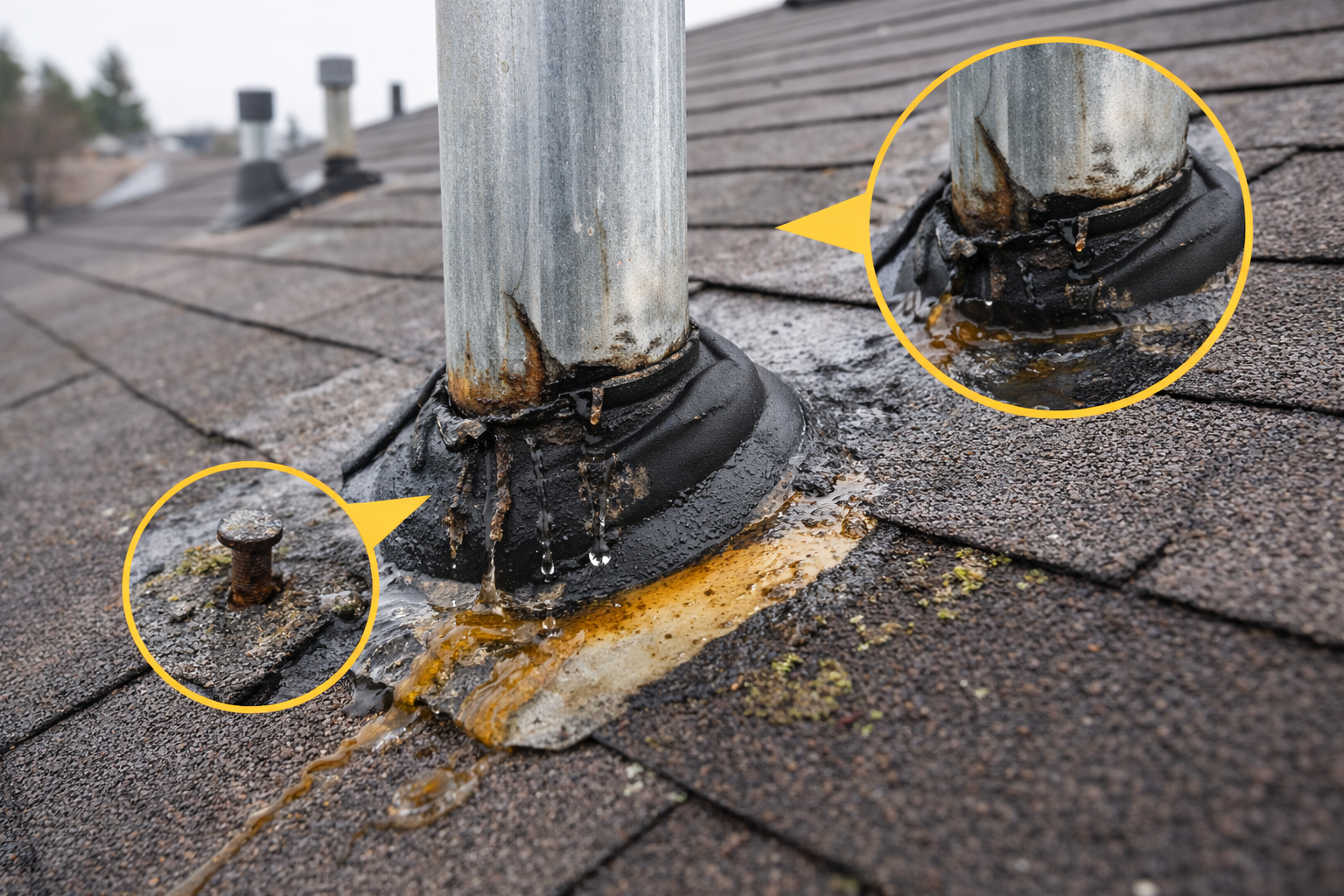
Roof penetrations are anything that goes through your roof deck—vents, pipes, chimneys, skylights, exhaust fans, and satellite dishes—and each requires proper flashing and sealing to prevent water intrusion. These are among the most common leak sources in Southwest Ohio homes because our region’s temperature extremes cause sealants to deteriorate and flashing to separate over time. The freeze-thaw cycles we experience throughout Warren, Montgomery, and Butler Counties are particularly hard on these vulnerable areas, expanding and contracting materials until seals fail.
Understanding Roof Penetrations
Every time something passes through your roof, it creates a potential entry point for water. In a perfect world, your roof would be one continuous, unbroken surface. However, modern homes require numerous penetrations for plumbing vents, kitchen and bathroom exhaust systems, attic ventilation, gas appliances, and more.
Each penetration requires careful integration with your roofing system. This involves cutting through multiple layers—shingles, underlayment, and roof decking—then installing specialized flashing and waterproof seals to create a watertight barrier. When properly installed, these penetrations should last as long as your roof itself. Unfortunately, even quality installations face challenges in our climate.
Why Penetrations Are Vulnerable to Leaking
Temperature Extremes and Material Fatigue
Southwest Ohio’s weather puts extraordinary stress on roof penetrations. Summer temperatures can push roof surface temps above 160°F, while winter brings sub-zero cold snaps. This constant expansion and contraction causes several problems:
Sealant deterioration: The rubber boots around plumbing vents and the caulking around other penetrations become brittle and crack after years of UV exposure and temperature cycling. Homes in Springboro, Centerville, and surrounding areas built in the 1990s and early 2000s are now reaching the age where original sealants are failing.
Flashing separation: Metal flashing expands and contracts at different rates than your shingles and roof deck. Over time, this can cause fasteners to loosen and gaps to form where water can enter.
Ice damming effects: During winter freeze-thaw cycles common throughout the Dayton metro, ice can build up around penetrations, forcing water under shingles and flashing.
Installation Quality Issues
Not all penetrations are created equal. Common installation mistakes include:
- Inadequate flashing coverage that doesn’t extend far enough under surrounding shingles
- Missing or improperly applied ice and water shield
- Wrong sealant types that aren’t rated for roofing applications
- Insufficient fastening of flashing components
- Improper shingling patterns around the penetration
These issues may not cause immediate problems, but they significantly reduce the lifespan of the waterproof seal.
Storm Damage Considerations
The hail storms and high winds that regularly impact Miamisburg, Kettering, Mason, and West Chester can directly damage penetration seals. Hail can crack rubber boots and dent flashing, while wind-driven rain can find its way into even small gaps. After major storm events, penetrations should be inspected as part of your insurance assessment.
Common Types of Penetrations and Their Leak Risks
Plumbing Vents
These pipes extending through your roof have rubber boots that seal around them. The rubber deteriorates faster on south and west-facing slopes due to sun exposure. Expect boots to need replacement every 10-15 years in our climate.
Chimneys
Chimney flashing is particularly complex, requiring both step flashing integrated with shingles and counter-flashing embedded in the chimney itself. Older homes in Oakwood, Dayton, and Bellbrook often have deteriorated mortar joints where counter-flashing has pulled loose.
Skylights
Skylights combine the challenges of a large roof opening with a complete curb system. Older skylights in homes from the 1970s-1990s often have outdated flashing systems that don’t meet modern waterproofing standards.
Roof Vents and Exhaust Fans
Kitchen vents, bathroom fans, and attic ventilation systems all require penetrations. The caps and flashing on these components can crack, rust, or separate from the roof surface.
Prevention and Maintenance
Regular inspections are your best defense against penetration leaks. Schedule professional roof inspections every 2-3 years, and always after significant storms. Between professional inspections:
- Check for cracked, worn, or missing sealant around penetrations
- Look for rust stains or damage on metal flashing
- Inspect rubber boots for cracks or separation
- Monitor your attic for water stains near penetration points
- Clear debris that accumulates around penetrations, as this holds moisture
Many penetration repairs are relatively minor if caught early—resealing a boot or applying new caulking costs far less than repairing water-damaged decking, insulation, and ceilings.
When to Call a Professional
If you notice active leaking, water stains spreading on ceilings, or visible damage to penetration components, contact a qualified roofing contractor immediately. Penetration leaks worsen quickly because water follows roof rafters and can travel far from the actual entry point, making DIY diagnosis difficult.
Protect Your Investment with Professional Care
At Rembrandt Roofing, we’ve spent years addressing penetration issues throughout Beavercreek, Lebanon, and the entire Southwest Ohio region. We understand how our local climate affects these vulnerable areas and use proven techniques to ensure long-lasting waterproof seals. Whether you need a complete roof replacement or targeted penetration repairs, our team provides thorough inspections and quality workmanship backed by solid warranties.
Don’t wait until a small leak becomes a major problem. Contact Rembrandt Roofing at https://rembrandtroofing.com today to schedule your roof inspection and get peace of mind that your home is protected from Ohio’s challenging weather.