
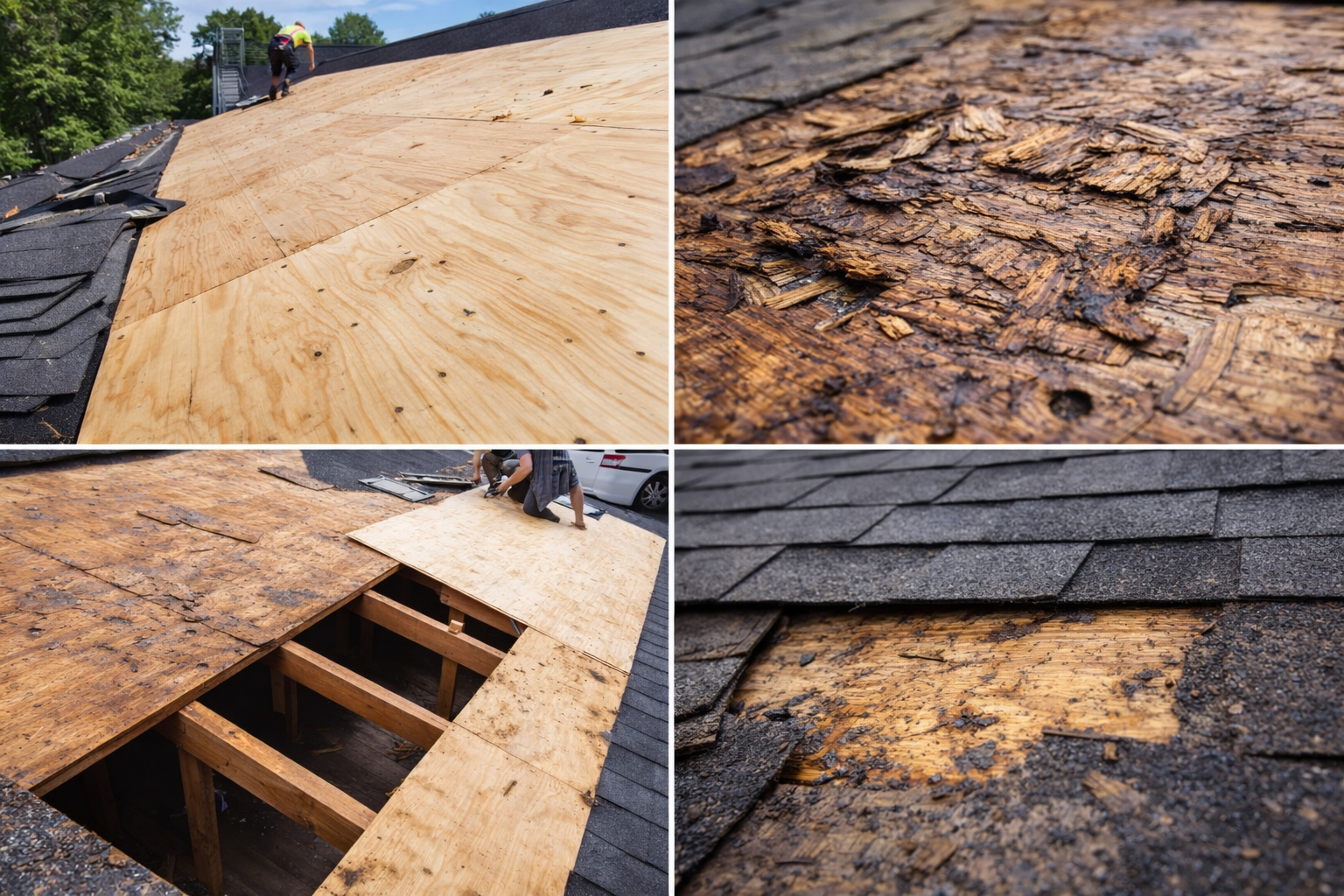
Roof decking is the layer of plywood or oriented strand board (OSB) that covers your roof’s structural framing and provides the surface to which shingles are attached. In Southwest Ohio homes, decking typically needs replacement when damaged by water infiltration from leaks, weakened by rot or mold, or deteriorated due to age and poor attic ventilation. Most decking issues are discovered during roof tear-off, though warning signs like sagging rooflines or interior water stains may indicate problems before a replacement project begins.
Understanding Roof Decking: Your Roof’s Foundation
Your roof decking serves as the critical structural layer between the framing rafters or trusses and your visible roofing material. Think of it as the “floor” of your roof system. Throughout Springboro, Centerville, and surrounding Warren and Montgomery County communities, most homes built from the 1950s onward use either plywood or OSB panels, typically measuring 4×8 feet and ranging from 7/16″ to 3/4″ thick depending on local building codes and rafter spacing.
The decking provides several essential functions: it creates a solid nailing surface for shingles, distributes the roof’s load across the framing structure, and forms a barrier against the elements. When your decking is compromised, your entire roofing system’s integrity is at risk, regardless of how new or expensive your shingles might be.
Common Causes of Decking Damage in Southwest Ohio
Water Infiltration and Leak Damage
Water damage represents the leading cause of decking failure in the Dayton metro area. When shingles fail, flashing deteriorates, or ice dams form during our freeze-thaw cycles, water seeps beneath the roofing material and saturates the decking. Over time, this moisture causes wood rot, delamination of OSB panels, and structural weakening. Homes in Kettering, Miamisburg, and Beavercreek with older roofing systems are particularly vulnerable, especially if previous repairs weren’t completed properly.
Poor Attic Ventilation
Southwest Ohio’s humid summers combined with inadequate attic ventilation create perfect conditions for moisture accumulation. When warm, moist air becomes trapped in your attic space, condensation forms on the underside of decking panels. This chronic moisture exposure leads to wood rot, mold growth, and premature deterioration—even when the roof surface appears intact. Many homes built in the 1970s and earlier throughout West Chester and Mason lack proper ridge and soffit ventilation by modern standards.
Storm Damage
Our region experiences significant storm activity, including spring hail events, summer wind storms, and occasional tornado touchdowns. High winds can lift shingles and drive rain underneath, while hail impact can compromise the protective barrier. When filing insurance claims with adjusters in Butler County and surrounding areas, damaged decking discovered during inspection is typically covered as part of storm damage replacement.
Age and Normal Deterioration
Even without specific damage events, decking deteriorates over time. Homes in Lebanon, Bellbrook, and Oakwood built in the 1950s-1970s may still have original decking that has reached the end of its serviceable life. The constant expansion and contraction from temperature changes, decades of nail penetrations, and accumulated stress all contribute to weakening.
Warning Signs Your Decking May Need Replacement
Watch for these indicators that your roof decking might be compromised:
Interior signs: Water stains on ceilings, visible sagging between rafters, damp insulation, or musty odors in your attic space all suggest moisture problems affecting your decking.
Exterior signs: Visible sagging or waviness in your roofline, shingles that appear uneven or “bumpy,” or daylight visible through roof boards from inside the attic indicate structural concerns.
During inspection: Soft spots when walking on the roof, spongy areas, or the ability to feel nails pulling through decking when pressure is applied all signal replacement needs.
The Decking Replacement Process
When Rembrandt Roofing tears off your old shingles in Centerville, Springboro, or throughout our service area, we thoroughly inspect every square foot of exposed decking. Damaged sections are marked and replaced with properly sized plywood or OSB that meets current building codes. In some cases, only a few sheets near problem areas like valleys or chimneys need replacement. In other situations—particularly with older homes or those with long-term leak issues—extensive or complete decking replacement becomes necessary.
Quality contractors always replace damaged decking before installing new roofing materials. Attempting to install a new roof over compromised decking is a recipe for premature failure, voided warranties, and potentially dangerous structural problems.
Insurance and Decking Replacement Costs
Many Southwest Ohio homeowners worry about decking replacement costs, but when damage results from covered storm events, insurance typically covers necessary decking work. When working with adjusters, documentation from the tear-off phase showing the extent and cause of decking damage strengthens your claim. For homes throughout Montgomery, Warren, and Butler Counties, proactive inspection and timely repairs prevent minor decking issues from becoming major insurance headaches.
Protect Your Investment with Professional Inspection
Your roof decking is too important to ignore. Whether you’re in Dayton, Springboro, or anywhere in Southwest Ohio, professional inspection identifies decking problems before they compromise your home’s protection.
Ready to ensure your roof’s foundation is sound? Contact Rembrandt Roofing at https://rembrandtroofing.com for a thorough roof inspection. Our experienced team serves Centerville, Springboro, and all surrounding communities with honest assessments and quality workmanship. Don’t wait for visible damage—schedule your inspection today and protect your most valuable investment.