
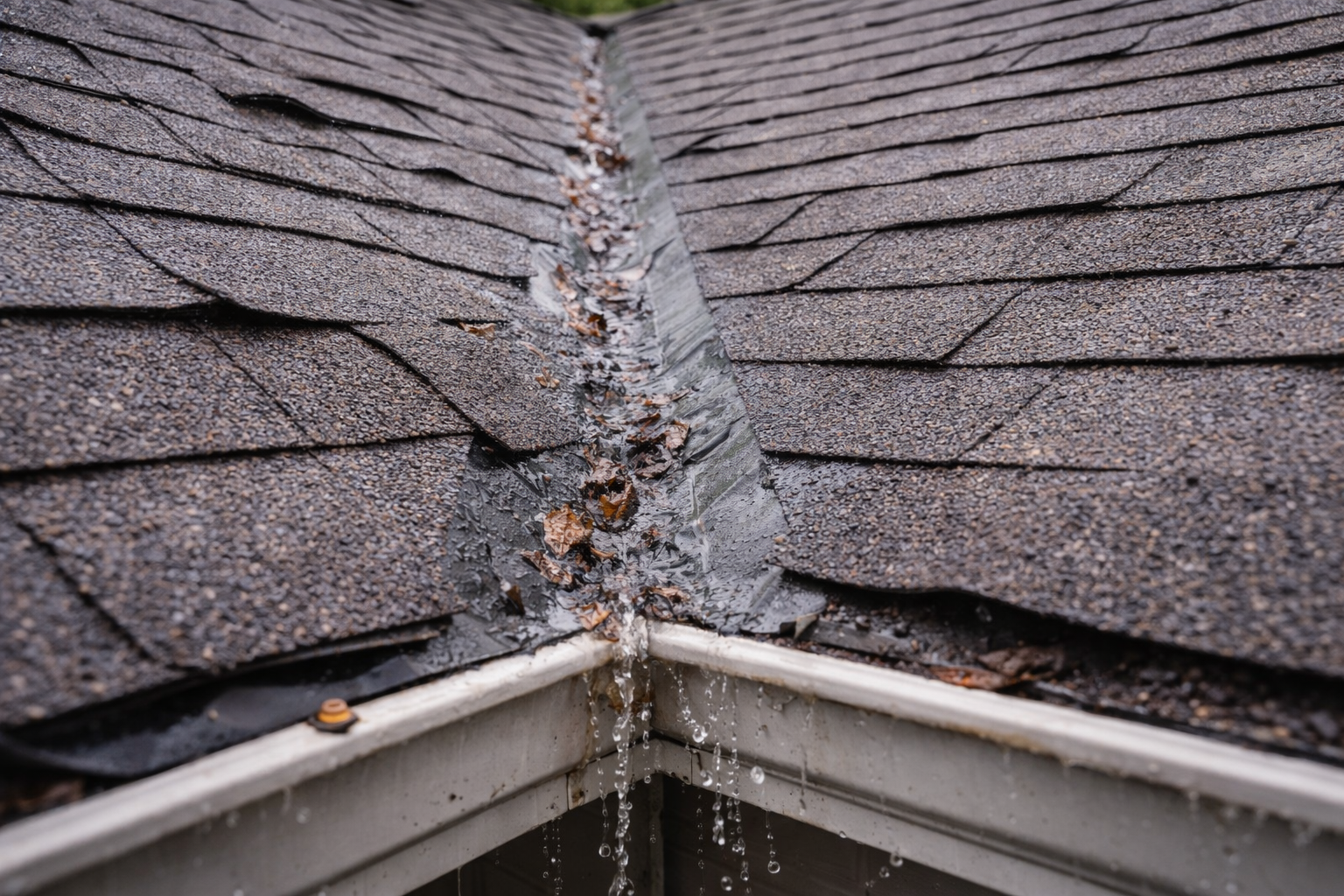
Valleys are V-shaped channels where two roof planes meet, directing heavy water flow that makes them leak-prone. In Southwest Ohio’s heavy rainstorms, improperly installed valley flashing or accumulated debris can cause water infiltration, especially in complex roof designs common in Mason and West Chester. The concentration of water in these areas puts stress on materials and seals, making valleys one of the most vulnerable areas of any roofing system.
Understanding Roof Valleys: The Basics
A roof valley forms at the internal angle where two roof slopes intersect, creating a channel that funnels rainwater and snowmelt down to your gutters. Think of it as a highway for water—while a typical roof section might handle the runoff from just one plane, a valley manages water from two surfaces simultaneously. This concentrated flow makes valleys critical components that require extra attention during installation and maintenance.
In the Dayton metro area, where homes in Centerville, Kettering, and Beavercreek feature complex rooflines with multiple gables and dormers, most residential properties have at least one valley, and many have several. The architectural diversity in our region—from ranch homes in older Springboro neighborhoods to two-story colonials in newer Lebanon subdivisions—means valley configurations vary widely, but they all share the same vulnerability to leaks when not properly maintained.
Why Roof Valleys Are Prone to Leaking
Concentrated Water Flow
The primary reason valleys leak is simple physics: water volume. When rain pounds down on your roof during Southwest Ohio’s notorious spring thunderstorms, valleys can channel several times more water than flat roof sections. This concentrated flow increases pressure on seals and flashing, exploiting any weakness in the installation. During heavy downpours common in Warren and Montgomery Counties, a single valley might handle hundreds of gallons per hour.
Improper Installation Techniques
Many valley leaks trace back to installation errors. There are three main valley types—woven, closed-cut, and open metal—and each requires precise technique. We frequently see problems in older Miamisburg and Bellbrook homes where valleys were installed without proper underlayment or where flashing wasn’t extended far enough beneath the shingles. Even a small gap can allow water to seep under shingles and into your home’s structure.
Debris Accumulation
Leaves, twigs, and organic matter naturally accumulate in valleys, especially in tree-lined neighborhoods throughout Oakwood and Beavercreek. When debris builds up, it creates dams that force water to pool rather than flow freely. This standing water then works its way under shingles, particularly during freeze-thaw cycles common in Southwest Ohio winters when ice formation expands and contracts, gradually loosening seals.
Material Deterioration
Asphalt shingles—the predominant roofing material throughout Butler and Warren Counties—have a finite lifespan. Valley areas wear faster due to constant water exposure and physical stress. In homes built during the 1990s construction boom in West Chester and Mason, valleys may fail years before the rest of the roof shows significant wear. Metal valley flashing can also corrode over time, especially in humid Ohio summers.
Warning Signs Your Valley Is Leaking
Interior Water Stains
Water stains on ceilings or walls near where roof planes meet indicate potential valley problems. In two-story homes common throughout Centerville and Kettering, check second-floor ceilings and attic spaces carefully after heavy rains.
Visible Damage From Ground Level
Use binoculars to inspect valleys from the ground. Look for missing shingles, visible gaps in flashing, or areas where shingles appear lifted or damaged. After Southwest Ohio’s periodic hail storms, valleys often sustain impact damage that compromises their integrity.
Musty Odors or Mold
Persistent moisture from valley leaks creates ideal conditions for mold growth in attics. If you notice musty smells in upper levels of your Springboro or Lebanon home, especially after rainstorms, investigate potential valley issues.
Preventing Valley Leaks: Professional Solutions
Regular professional inspections are your best defense against costly valley leaks. Rembrandt Roofing recommends annual inspections for homes throughout the Dayton area, with additional checks after significant weather events like the severe thunderstorms and occasional straight-line winds our region experiences.
Professional valley repair or replacement involves installing proper ice and water shield underlayment, ensuring adequate flashing coverage, and using appropriate installation methods for your specific roof configuration. For homes with a history of valley problems, upgrading to metal valley flashing during your next roof replacement provides superior durability and water management.
Working With Insurance on Valley Damage
When storm damage affects your roof valleys—whether from hail, wind-driven rain, or falling branches—documentation is crucial for insurance claims. Valley damage from covered events may qualify for insurance-supported repairs or replacement. Rembrandt Roofing has extensive experience working with insurance adjusters throughout Warren, Montgomery, and Butler Counties to ensure homeowners receive appropriate coverage for storm-related valley damage.
Protect Your Home With Professional Valley Maintenance
Valley leaks won’t improve on their own—they only worsen with time and weather exposure. If you’ve noticed warning signs or simply want peace of mind about your roof’s condition, Rembrandt Roofing provides comprehensive inspections and expert repairs throughout Springboro, Centerville, Dayton, and all surrounding Southwest Ohio communities.
Contact Rembrandt Roofing today at rembrandtroofing.com to schedule your roof valley inspection. Our experienced team will assess your valleys, identify potential problems, and provide honest recommendations to protect your home from water damage.