
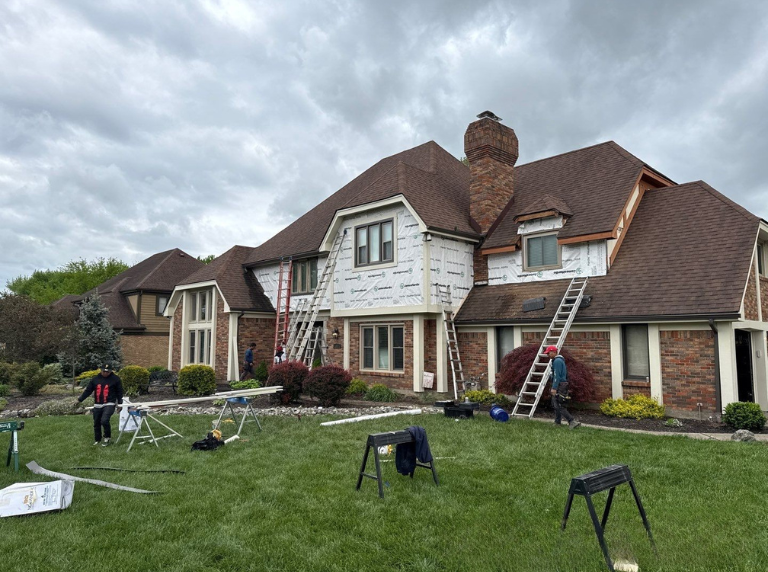
The Short Answer: Professional roofing contractors stop work immediately when rain, high winds (25+ mph), or extreme temperatures threaten safety or installation quality. Quality contractors communicate proactively, secure your partially completed roof, reschedule promptly, and never charge extra for weather delays. Any roofer willing to work through unsafe conditions or who penalizes you for weather is cutting corners that will void your warranty.
When Weather Actually Stops Roofing Work
Rain and Moisture (Absolute Stop)
- Cannot install shingles on wet surfaces
- Moisture under shingles causes mold, rot, and adhesion failure
- Wet decking won’t seal properly
- Even light drizzle requires stopping work
- Must wait for complete surface drying (2-4 hours after rain)
High Winds (Work Stops at 25+ mph)
- Safety hazard for crews working at height
- Shingles won’t seal properly in high wind
- Materials can blow off roof causing property damage or injury
- Tarps and equipment become dangerous projectiles
- Most manufacturers void warranties for installation above 25 mph
Extreme Temperatures
- Below 40°F: Shingle adhesive won’t activate properly
- Above 95°F: Shingles become too pliable, easy to damage
- Extreme heat creates crew safety concerns
- Cold weather installations require special techniques
Storms Approaching
- Work stops when storms forecast within 2-3 hours
- Time needed to secure site and protect open areas
- Safety priority over rushing to finish
Red Flag: Any contractor who says “We work in any weather” is either inexperienced or willing to compromise quality and safety for schedule.
The 5-Step Professional Weather Delay Protocol
Step 1: Proactive Weather Monitoring
- Check forecast daily before crew dispatch
- Monitor weather apps throughout work day
- Communicate potential delays night before when possible
- Plan work sequence around weather windows
Step 2: Immediate Work Stoppage When Needed
- Cease work at first sign of unsafe conditions
- No “just finish this section” mentality
- Crew safety and quality prioritized over schedule
- Decision made by supervisor, not pressured by homeowner
Step 3: Secure Partially Completed Work
- Cover exposed decking with tarps immediately
- Weight tarps securely to prevent wind damage
- Protect material staging areas
- Secure all equipment and loose items
- Ensure water won’t penetrate incomplete sections
Step 4: Direct Communication with Homeowner
- Call or text as soon as delay decision made
- Explain specific weather concern
- Provide realistic rescheduling timeline
- Confirm property is secure
- Answer questions about partial completion
Step 5: Prompt Rescheduling
- Resume work as soon as conditions safe
- Keep homeowner as priority in schedule
- Minimal disruption to overall timeline
- Update timeline expectations if extended delays
What Happens to Your Partially Completed Roof
If Tear-Off Started But Not Completed:
- All exposed areas covered with waterproof tarps
- Tarps secured with boards and weights (not just laid down)
- Checked multiple times if storm expected
- Emergency contact provided if concerns arise
If Underlayment Installed:
- Synthetic underlayment provides temporary water protection
- Additional tarping for extra security if needed
- Safe from brief weather delays (24-48 hours)
- Crew returns to complete as soon as possible
If Shingles Partially Installed:
- Completed sections typically weather-tight
- Transition areas tarped and secured
- Most protected state during weather delays
- Resume work with minimal impact
Your Rights During Delays:
- No additional charges for weather delays
- Daily updates on rescheduling
- Assurance property is secure
- Access to supervisor with concerns
Red Flags in Weather Delay Handling
✗ Dangerous Contractor Practices:
- Insists on working through light rain “to stay on schedule”
- Dismisses wind warnings or safety concerns
- Leaves exposed decking overnight without proper tarping
- Charges fees for weather-related delays
- Doesn’t secure work site before leaving
- Fails to communicate delay until you call them
- Takes days to reschedule after weather clears
✗ What These Practices Mean:
- Quality compromised for convenience
- Safety not prioritized
- Warranty likely void due to improper installation
- Professional standards not followed
- Lack of accountability and communication
How Dayton Weather Impacts Roofing Schedules
Spring (March-May):
- Most unpredictable season for delays
- Frequent rain and thunderstorms
- Plan for 1-3 potential delay days
- Best season otherwise (moderate temperatures)
Summer (June-August):
- Afternoon thunderstorms common
- Morning starts ideal (work before heat/storms)
- Extreme heat may slow work pace
- Lightning delays common
Fall (September-November):
- Most reliable weather for roofing
- Fewer delays expected
- Ideal installation temperatures
- Earlier sunset limits work hours
Winter (December-February):
- Limited roofing season in Ohio
- Cold weather requires special installation methods
- Ice and snow create frequent delays
- Emergency repairs only recommended
Questions That Reveal Weather Delay Competency
Ask during estimate:
“What’s your process when weather interrupts the project?”
- Should describe specific securing procedures
- Mention communication protocol
- Explain rescheduling approach
“How do you protect my home if you have to stop mid-project?”
- Detailed tarping and securing process
- Emergency contact information provided
- Inspection before leaving site
“What weather conditions will stop work?”
- Should mention rain, wind speeds, temperatures
- Explanation of safety and quality concerns
- Manufacturer warranty requirements
“Do you charge extra for weather delays?”
- Answer should be definite “No”
- Professional contractors absorb weather risk
- Built into project management
“How quickly can you resume after weather clears?”
- Should prioritize returning to your project
- Realistic timeline (usually 1-2 days)
- Communication about schedule
Bottom Line: Weather Response Reveals Character
Professional Standards:
✓ Stops work immediately when unsafe
✓ Secures property before leaving
✓ Communicates proactively about delays
✓ Reschedules promptly when weather clears
✓ Never charges for weather delays
✓ Follows manufacturer installation requirements
Unacceptable Practices:
✗ Works through unsafe conditions
✗ Leaves property unsecured
✗ Poor communication about delays
✗ Takes days to reschedule
✗ Charges weather delay fees
✗ Pressures crew to work in marginal conditions
Next Steps: Set Weather Expectations Upfront
Include in your contract:
- Weather clause stating no additional charges for delays
- Securing protocol for partially completed work
- Communication requirements during delays
- Rescheduling timeline expectations
- Emergency contact information
Questions for your Dayton roofing contractor:
- “Show me examples of how you secure partially completed roofs.”
- “What’s your typical response time for weather delays?”
- “Who do I contact if I have concerns during a delay?”
- “How do you monitor weather during the project?”
Remember: Experienced Dayton contractors like Rembrandt Roofing with 20+ years in business have weather delay procedures refined through hundreds of projects. Ohio weather is unpredictable—how a contractor handles these inevitable delays reveals their professionalism, communication, and commitment to quality over convenience.